

4 Smart Ways to Put Your Home Equity to Work

You’ve probably heard that today’s homeowners are sitting on a lot of equity. But what does that actually mean? Let’s break it down.
Because your equity isn’t just a number—it’s a valuable asset that can help you take your next big step.
How Much Equity Does the Average Homeowner Have?
Here’s how it works: as you pay down your mortgage and home values increase over time, the portion of your home you own outright grows. That’s your equity.
And according to data from the Census and ATTOM, nearly two-thirds of homeowners now have significant equity.
In fact, 39% own their homes free and clear, and another 27% have built at least 50% equity (see chart below).
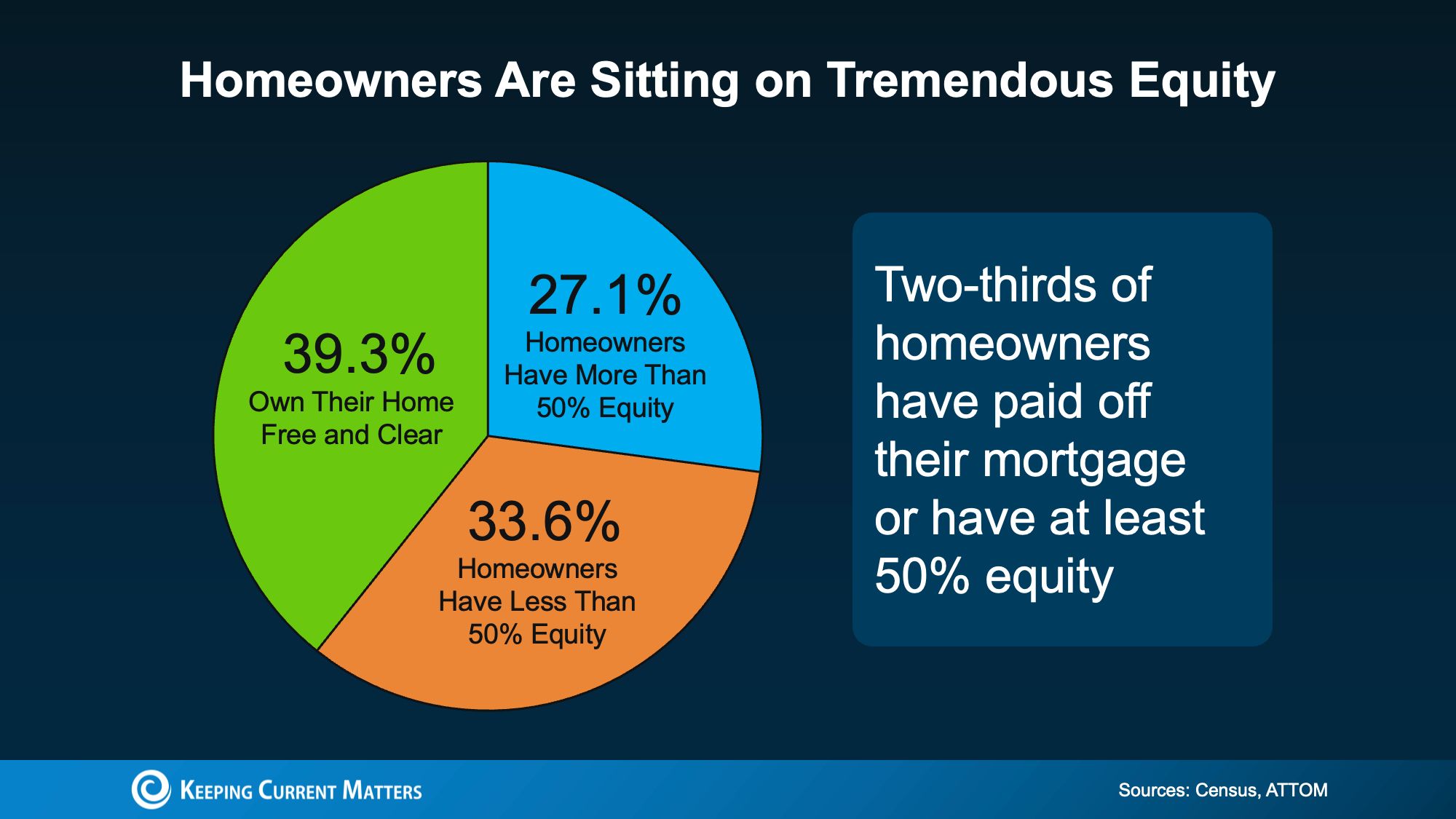
That’s significant. And to put that into perspective, Cotality reports that the average homeowner now has nearly $300,000 in equity—that’s a six-figure asset.
Whether you’re above, below, or right around that number, here are a few ways it can work for you.
Smart Ways to Use Your Home Equity
1. Upgrade (or Downsize) to a Home That Matches Your Current Needs
Your needs evolve over time. Maybe your home now feels too small—or maybe it feels too large since your children have moved out. Either way, your equity can be used as a down payment on a home that better fits your life today and in the years ahead. In some cases, it may even be enough to purchase your next home in cash.
2. Invest in Improving Your Current Home
If you’re not planning to move right now, another option is to reinvest your equity into your current home. Strategic upgrades—like refreshing your kitchen or updating bathrooms—can boost your home’s value when it’s time to sell. Before starting any major projects, it’s smart to consult with a real estate professional to focus on improvements that offer the strongest return.
3. Leverage Your Equity for Big Life Plans
Your home equity can also support major life goals—whether that means launching a business, strengthening your retirement savings, paying for education, or helping a loved one. Some homeowners even use it to assist family members with a down payment on their first home.
4. Protect Your Home During Financial Challenges
If you’re having difficulty keeping up with payments, your equity can serve as a financial lifeline. In many cases, homeowners facing hardship are able to sell their homes and walk away with funds, rather than going through foreclosure. If this is a concern, speaking with a real estate professional can help you understand your options and how your equity may work in your favor.
Your Next Move
If you’re considering putting your equity to work, here’s a smart way to start:
- Step 1: Connect with a local real estate agent for a customized equity evaluation of your home.
- Step 2: If you plan to access that equity, consult with a financial advisor to make sure it aligns with your broader goals.
When accessing your equity, there are important factors to consider—such as maintaining a healthy loan-to-value (LTV) ratio, even after pulling funds out.
As a general guideline, it’s wise to keep at least 20% equity in your home as a financial buffer. Many homeowners learned the importance of that cushion during the 2008 housing downturn.
The encouraging news is that many homeowners already meet this benchmark. Data from the Intercontinental Exchange shows that most equity today remains well within safe limits:
“By Q4, homeowners had $17.3 trillion in total equity, with $11.2 trillion available to tap—while still preserving a 20% equity cushion.”
Bottom Line
Your home equity is one of your most valuable financial assets. Whether you’re considering a move, planning upgrades, or working toward a major goal, it’s worth taking time to explore your options. Connecting with a financial advisor can help you make informed decisions.
So, what’s one goal you’d pursue right now if the funding were in place?
{ "@context": "https://schema.org", "@type": "FAQPage", "mainEntity": [ { "@type": "Question", "name": "What percentage of homeowners own their homes free and clear?", "acceptedAnswer": { "@type": "Answer", "text": "39% of homeowners own their homes free and clear, and another 27% have built at least 50% equity." } }, { "@type": "Question", "name": "How much equity does the average homeowner have according to Cotality?", "acceptedAnswer": { "@type": "Answer", "text": "The average homeowner has nearly $300,000 in equity." } }, { "@type": "Question", "name": "What is the general guideline for how much equity homeowners should keep in their home as a financial buffer?", "acceptedAnswer": { "@type": "Answer", "text": "Homeowners should aim to keep at least 20% equity in their home as a financial buffer." } }, { "@type": "Question", "name": "How much total equity did homeowners have by Q4, according to the Intercontinental Exchange?", "acceptedAnswer": { "@type": "Answer", "text": "Homeowners had $17.3 trillion in total equity, with $11.2 trillion available to tap while still preserving a 20% equity cushion." } }, { "@type": "Question", "name": "What are the four smart ways homeowners can put their equity to work?", "acceptedAnswer": { "@type": "Answer", "text": "Homeowners can put their equity to work by upgrading or downsizing to a home that better fits current needs, investing in home improvements, leveraging equity for big life goals (like starting a business or funding education), and using equity as a financial lifeline during hardship to avoid foreclosure." } }, { "@type": "Question", "name": "What two steps does the article recommend for homeowners considering using their equity?", "acceptedAnswer": { "@type": "Answer", "text": "Step 1 is to connect with a local real estate agent for a customized equity evaluation. Step 2 is to consult with a financial advisor to ensure accessing that equity aligns with broader financial goals." } }, { "@type": "Question", "name": "Why does the article suggest consulting a real estate professional before making home improvements?", "acceptedAnswer": { "@type": "Answer", "text": "A real estate professional can help homeowners prioritize improvements that offer the strongest return on investment when it comes time to sell." } }, { "@type": "Question", "name": "Why is maintaining a 20% equity cushion considered important, and what historical event reinforced this lesson?", "acceptedAnswer": { "@type": "Answer", "text": "Maintaining a 20% equity cushion helps protect homeowners during market downturns and reduces the risk of owing more than the home is worth. The 2008 housing downturn reinforced how important this buffer can be." } }, { "@type": "Question", "name": "How can home equity serve as a safety net for homeowners facing financial difficulty?", "acceptedAnswer": { "@type": "Answer", "text": "Homeowners with significant equity who are struggling with payments may be able to sell their home and walk away with funds rather than going through foreclosure, giving them more options during a hardship." } }, { "@type": "Question", "name": "In what ways does home equity function as both a personal financial tool and a means to support others?", "acceptedAnswer": { "@type": "Answer", "text": "Home equity can help homeowners pursue personal goals like retirement savings, renovations, education, or launching a business, and it can also be used to support others—such as helping a family member with a down payment on their first home." } } ] }
Categories
Recent Posts






GET MORE INFORMATION
