

This May Change How You See Investors in Today’s Housing Market

There’s been a lot of buzz lately around investors in the housing market.
Some headlines make it appear that big Wall Street firms are scooping up every home they can find. For buyers, that can make the market feel even more difficult to break into.
But when you examine the numbers more carefully, a different picture starts to take shape.
Most Real Estate Investors Are Everyday Owners
When most people hear the word investor, they tend to picture big corporations. That perception helps fuel the myth that they’re buying up every home on the market.
Most investors aren’t major corporations.
They’re regular people just like you.
They’re often someone who owns a second home, like a vacation property, a neighbor with one or two rental units, or even a homeowner who planned to sell but decided to rent the property instead after not getting the price they wanted.
When all of those types of owners get grouped together in the headlines, the number of “investors” can sound much bigger than it really feels, especially if you’re assuming every investor is a large-scale buyer.
But here’s what the data really shows when you dig a little deeper.
Institutional Investors Make Up a Small Share of the Housing Market
Large institutional investors, the big companies that buy homes, account for only a very small portion of the overall housing market.
According to BatchData, the largest investors, defined as those owning 1,000 or more homes, hold just 0.4% of the country’s 86 million single-family homes. Their share of the market is also getting smaller.
According to Parcl Labs, big investors are selling four homes for every one they’re purchasing right now (see visual below):
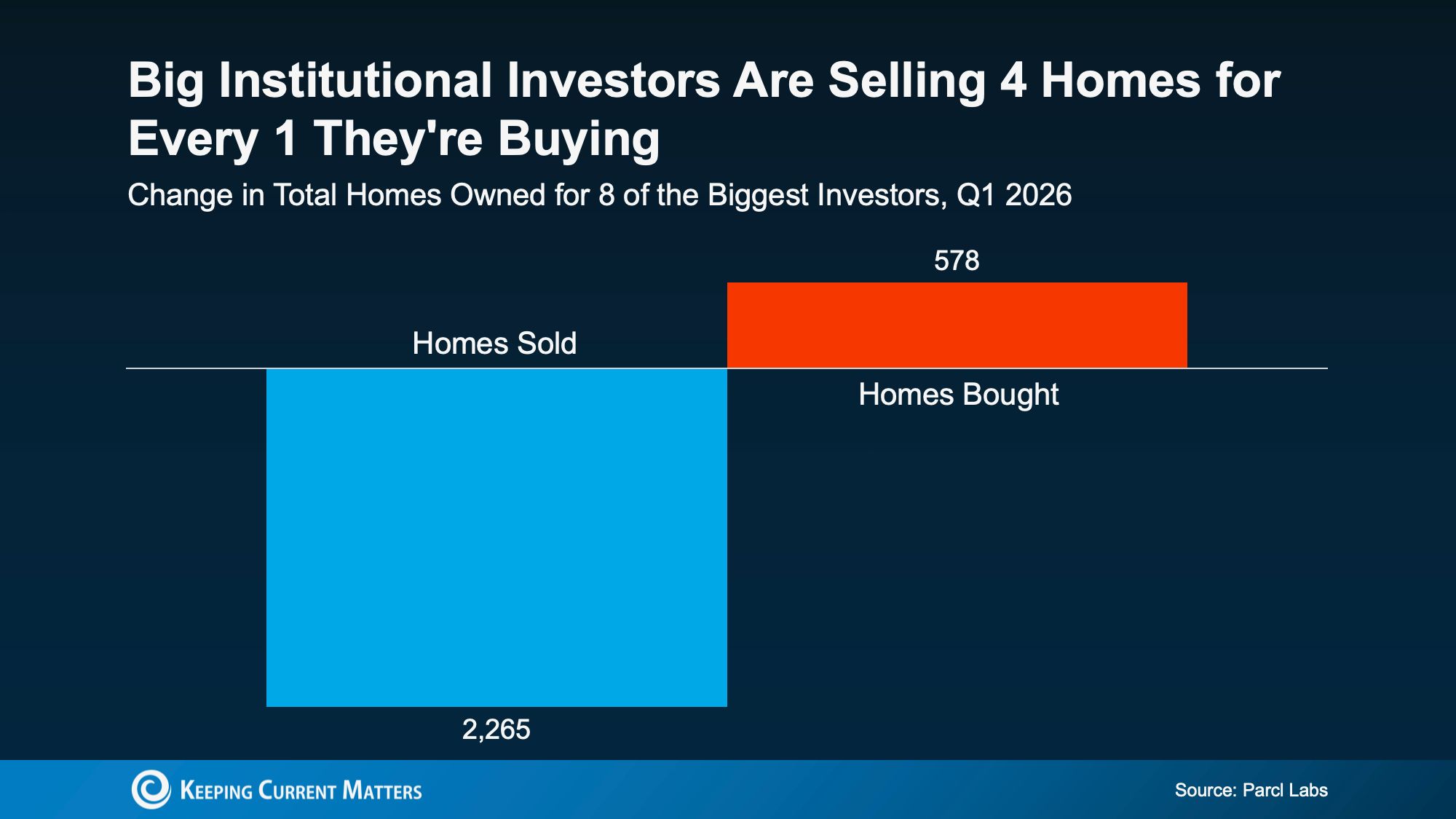
That means they’ve added nearly 1,700 homes back into the market in recent months.
What This Means for Today’s Homebuyers and Sellers
The picture is becoming much clearer. Rather than aggressively buying up homes, many of these companies are pulling back, which means their presence in the market is likely smaller than many people assume. If you’ve been worried they were dominating the market, that should offer some reassurance.
In reality, most of the competition buyers face still comes from other everyday buyers. And with many large investors stepping back, there may be more opportunity in today’s market than you realize.
Bottom Line
It’s easy to think large investors are taking over the housing market, but the data shows a different reality. If you want to understand what investor activity really looks like in our local market, connect with a local real estate agent.
In many cases, it’s likely playing a much smaller role than you might expect.
{ "@context": "https://schema.org", "@type": "FAQPage", "mainEntity": [ { "@type": "Question", "name": "Who are most real estate \"investors\" actually referring to?", "acceptedAnswer": { "@type": "Answer", "text": "Most investors are everyday people — someone with a vacation home, a neighbor who owns one or two rental units, or a homeowner who decided to rent out their property instead of selling after not getting the price they wanted. They aren't the large Wall Street corporations that headlines often imply." } }, { "@type": "Question", "name": "What share of the housing market do the largest institutional investors actually hold?", "acceptedAnswer": { "@type": "Answer", "text": "According to BatchData, the largest investors — those owning 1,000 or more homes — hold just 0.4% of the country's 86 million single-family homes. That's a very small slice of the overall market." } }, { "@type": "Question", "name": "Are big investors buying more homes or selling them right now?", "acceptedAnswer": { "@type": "Answer", "text": "They're selling. According to Parcl Labs, big investors are currently selling four homes for every one they purchase — meaning they're pulling back from the market, not expanding their presence in it." } }, { "@type": "Question", "name": "How many homes have large investors returned to the market recently?", "acceptedAnswer": { "@type": "Answer", "text": "By selling far more than they buy, large institutional investors have added nearly 1,700 homes back to the housing market in recent months." } }, { "@type": "Question", "name": "Is the market share of institutional investors growing or shrinking?", "acceptedAnswer": { "@type": "Answer", "text": "It's shrinking. The data shows that large investors' share of the housing market is getting smaller over time, which means their influence is likely less significant than many people assume." } }, { "@type": "Question", "name": "Who do everyday homebuyers actually compete against most?", "acceptedAnswer": { "@type": "Answer", "text": "Most competition comes from other everyday buyers — not large institutional investors. With many big investors stepping back, there may actually be more opportunity in today's market than buyers realize." } }, { "@type": "Question", "name": "How can buyers get an accurate picture of investor activity in their local market?", "acceptedAnswer": { "@type": "Answer", "text": "The best approach is to connect with a local real estate agent. National headlines can paint a misleading picture, but a local agent can provide ground-level insight into how investor activity — or the lack of it — actually affects a specific area." } } ] }
Categories
Recent Posts




GET MORE INFORMATION
