

What factors are driving up home prices?
Home prices can be unpredictable, and buying or selling a home can be an emotional experience. Many people feel a mix of financial goals, doubts, and anxiety during the process.
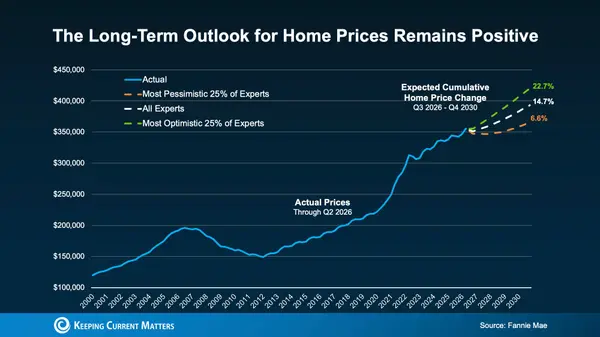
If you're postponing your move because you're hoping home prices will drop, don't hold your breath. National data from several sources shows that home prices have been rising steadily this year (see graph below).
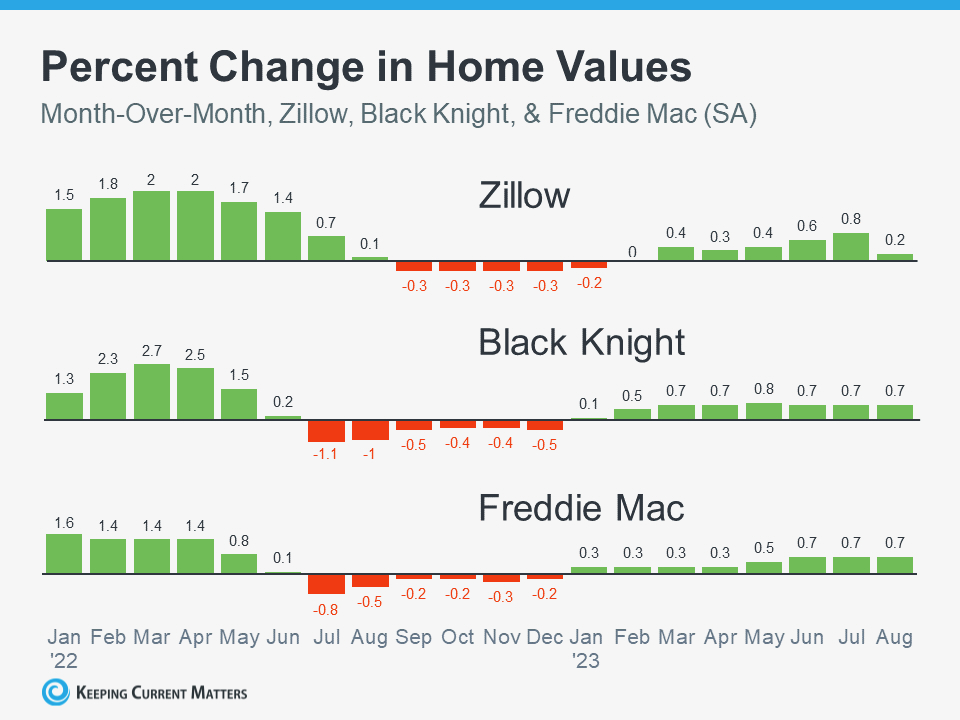
The graph shows that home prices increased sharply in the first half of 2022 (shown by the green bars on the left). However, these increases were so dramatic that they could not be sustained.
Therefore, during the latter half of the year, prices experienced a correction and began to decline slightly (as indicated by the red portions). However, these modest decreases were not profound and didn't last long. Nevertheless, the media heavily emphasized these declines in their headlines, leading to a substantial amount of fear and uncertainty among consumers.
What has not been widely reported is that home prices are rising again in 2023, but at a more sustainable pace (shown by the green bars on the right side of the graphs above). This is good news for the housing market, as it follows the unusually high price gains and subsequent corrections of 2022.
Orphe Divounguy, Zillow's Senior Economist, offers the following explanation for the evolution of home prices over the last year:
“Home prices have skyrocketed in the past year, after a brief dip from July 2022 to January 2023. The downturn was short-lived, and the housing market has rebounded strongly in 2023.”
Home price appreciation typically slows down in the fall. The media may confuse this with home prices falling, but it's important to remember that slower price growth is still growth.
Why Are Home Prices Increasing Now?
One of the factors driving the increase in home prices is the insufficient availability of homes for sale to accommodate the demand from potential buyers.
While higher mortgage rates can dampen buyer demand, they can also reduce the supply of homes available for sale. This is because of the mortgage rate lock-in effect. When rates rise, homeowners with low mortgage rates may be reluctant to sell their homes and take on a higher rate for their next purchase.
Higher mortgage rates have impacted both buyers and sellers, disrupting the supply and demand balance in the housing market. However, because there are still more people who want to buy homes than there are homes available, prices continue to rise. As Freddie Mac states:
Rising interest rates have made it harder and less affordable for people to buy homes, reducing demand. However, they have also reduced the supply of homes for sale, due to the mortgage rate lock-in effect. Overall, the decrease in supply has been greater than the decrease in demand, which is why home prices have started to increase.
Here’s How This Impacts You
- Buyers: If you've been holding off on buying a home because you're worried about prices falling, don't be. Home prices are rising again, and buying a home is a great way to invest in your future. Home ownership is typically a good long-term investment, as home values tend to appreciate over time.
- Sellers: If you've been hesitant to sell your home because of changing home prices, now is a good time to work with a real estate agent and put your home on the market. The latest data shows that home prices have turned in your favor, so you don't have to wait any longer to get a good deal.
Bottom Line
If you've been waiting to move because you're concerned about home prices falling, data shows that they're rising nationwide. Work with a local real estate agent to understand the local market and make the best decision for your needs.
Categories
Recent Posts

GET MORE INFORMATION
