

Housing Inventory Is Rebounding in 2026

After an extended period of intense competition and limited supply, the number of homes on the market has been steadily increasing over the past year. In many areas, that growth is creating real opportunities for buyers.
Data from Realtor.com shows that January inventory reached its highest level since 2020. That matters because it signals a gradual move back toward more balanced, pre-pandemic market conditions.
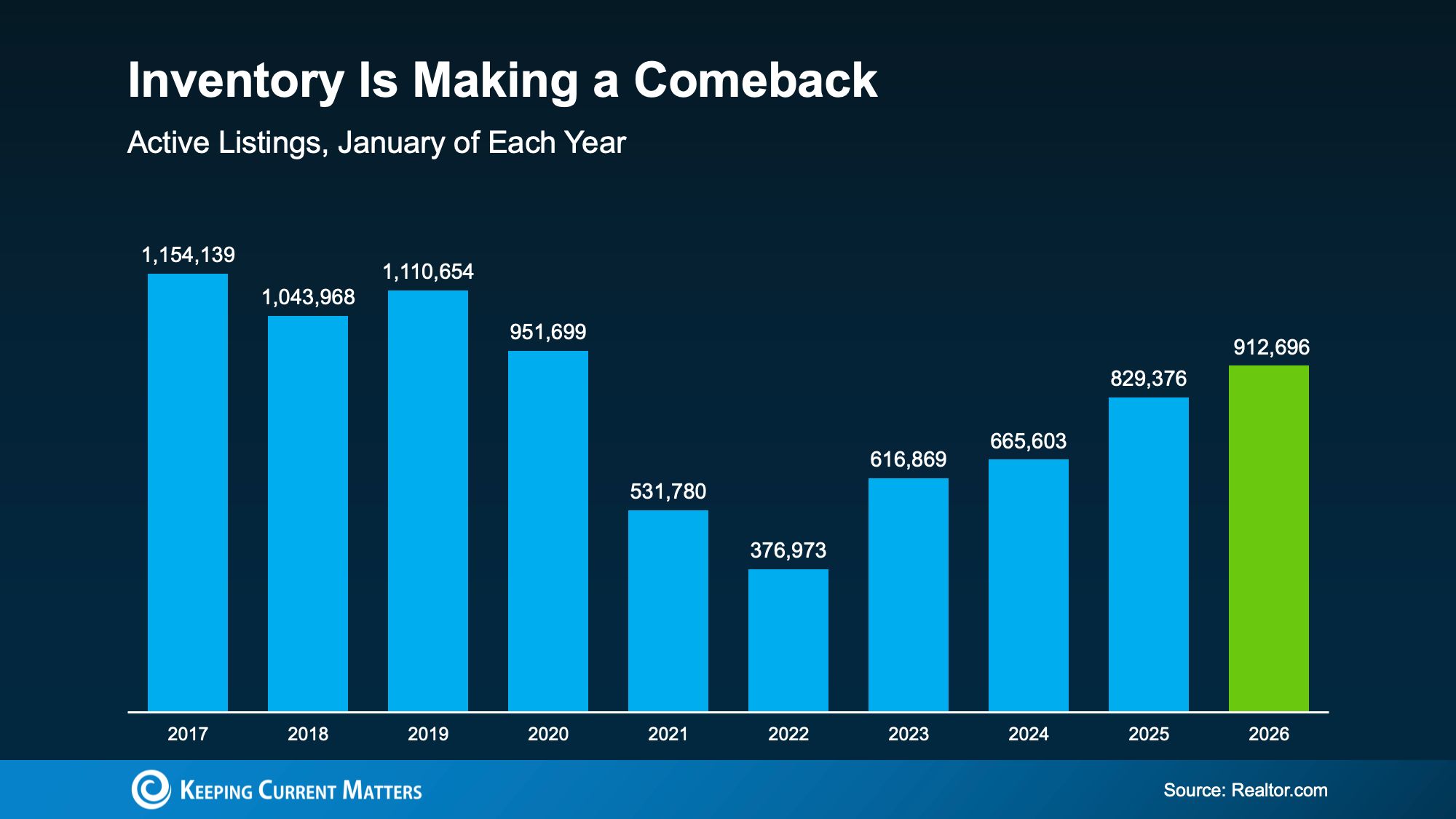
It’s important to keep this in perspective. Nationally, we haven’t fully returned to normal inventory levels—and a bump in supply won’t instantly solve every market challenge. That said, the recent growth does meaningfully shift the tone of the market.
More homes on the market means buyers can slow down. Compare options. Negotiate. Think strategically instead of reactively.
When inventory is scarce, everything speeds up—and pressure builds fast.
For years, the shortage made the market feel rushed and stressful. That dynamic is starting to ease.
More Markets Are Returning to Balanced Conditions
Inventory recovery isn’t happening evenly everywhere. Some markets are rebounding much faster than others. According to Lance Lambert, Co-Founder of ResiClub, in January 2025—just over a year ago—only 41 of the nation’s 200 largest metro areas had returned to normal inventory levels.
By the end of the year, that number had nearly doubled, with close to half of those metros (90) back at or above typical supply. That’s a major shift in a short period of time—and the trend is still moving in the right direction.
Market Forecasts Point to Continued Inventory Growth
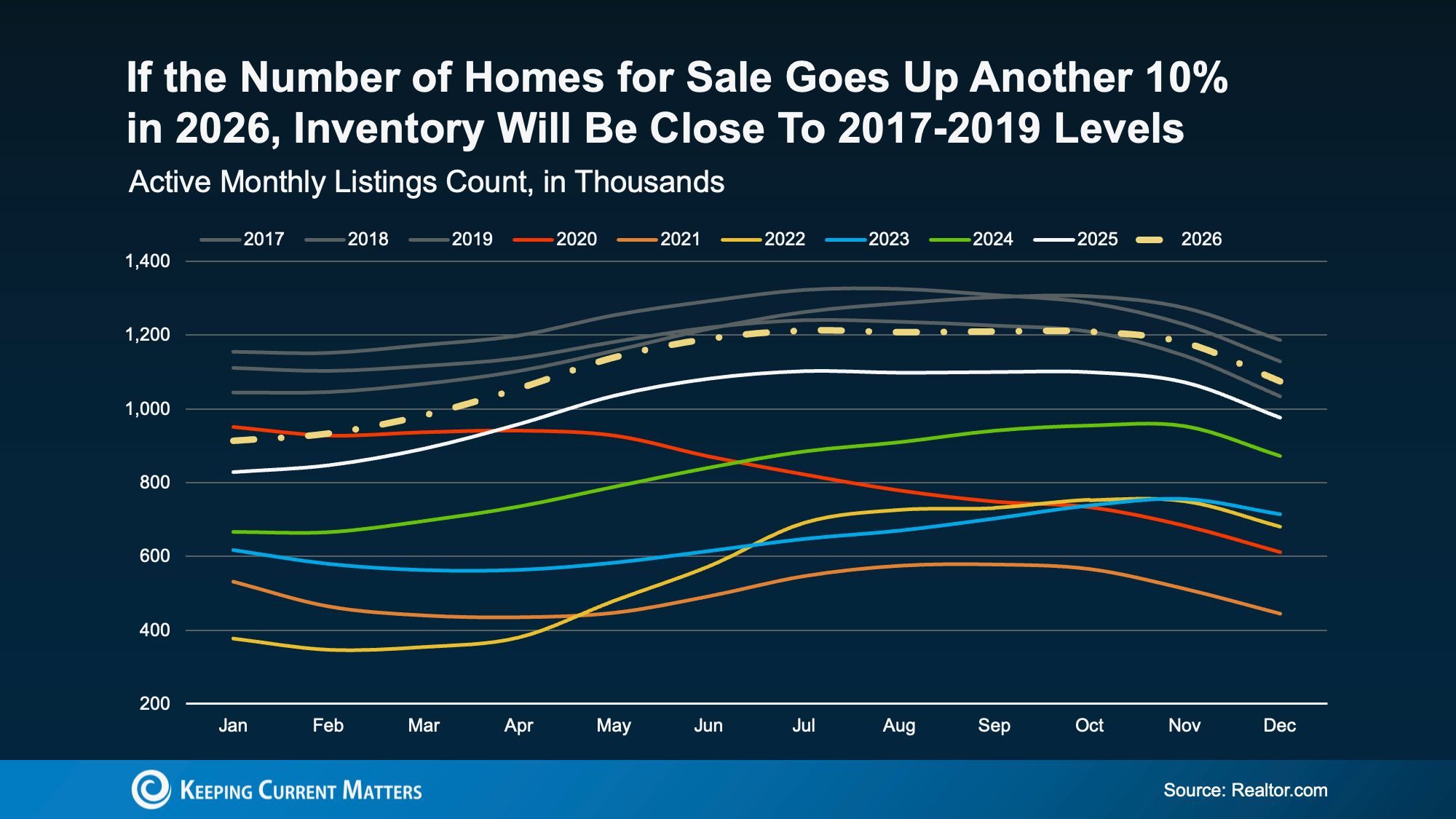
Looking ahead, forecasts indicate that housing inventory could increase by another 10% this year. If that happens, even more markets are likely to move into recovery territory.
The chart below illustrates what that additional growth could mean. The projected increase (shown by the dotted line) aligns with inventory levels seen between 2017 and 2019 by around this fall, represented by the gray benchmarks.
And that shift is making the home search more buyer-friendly. As Hannah Jones of Realtor.com explains:
“After years of a strong seller-driven market, conditions are gradually rebalancing. As inventory grows, buyers are gaining more choices and renewed negotiating power.”
Put simply, the market is starting to support buyers again—rather than working against them.
Bottom Line
Supply hasn’t fully normalized across the country—but momentum is clearly building. In some markets, inventory has already returned to more typical levels.
For buyers who’ve been waiting for more choices and less pressure, this is the most favorable setup we’ve seen in years. To understand how this trend is playing out in your specific area, connect with a knowledgeable local agent.
{ "@context": "https://schema.org", "@type": "FAQPage", "mainEntity": [ { "@type": "Question", "name": "What is the current state of housing inventory in 2026?", "acceptedAnswer": { "@type": "Answer", "text": "Housing inventory has been steadily increasing over the past year and reached its highest level since 2020 in January. This represents a gradual return toward more balanced, pre-pandemic market conditions. While inventory hasn't fully normalized nationally, the growth is creating real opportunities for buyers in many areas." } }, { "@type": "Question", "name": "How does increased inventory benefit homebuyers?", "acceptedAnswer": { "@type": "Answer", "text": "More homes on the market allows buyers to slow down their decision-making process, compare multiple options, negotiate more effectively, think strategically instead of reactively, and experience less pressure and stress during their home search. When inventory was scarce, buyers had to act quickly under intense pressure, but that dynamic is now starting to ease." } }, { "@type": "Question", "name": "How many markets have returned to normal inventory levels?", "acceptedAnswer": { "@type": "Answer", "text": "The recovery has been significant but uneven. In January 2025, only 41 of the nation's 200 largest metro areas had returned to normal inventory levels. By the end of that year, that number nearly doubled to 90 markets—meaning close to half of major metros are now at or above typical supply levels." } }, { "@type": "Question", "name": "What do forecasts predict for housing inventory this year?", "acceptedAnswer": { "@type": "Answer", "text": "Market forecasts indicate that housing inventory could increase by another 10% in 2026. If this projection holds true, inventory levels could align with the more balanced conditions seen between 2017 and 2019 by around fall of this year, bringing even more markets into recovery territory." } }, { "@type": "Question", "name": "Is the market becoming more buyer-friendly?", "acceptedAnswer": { "@type": "Answer", "text": "Yes. After years of a strong seller-driven market, conditions are gradually rebalancing. As inventory grows, buyers are gaining more choices and renewed negotiating power. The market is starting to support buyers again rather than working against them, representing the most favorable setup for buyers in years." } }, { "@type": "Question", "name": "Should buyers expect the same conditions in every market?", "acceptedAnswer": { "@type": "Answer", "text": "No. Inventory recovery isn't happening evenly everywhere—some markets are rebounding much faster than others. Buyers should connect with a knowledgeable local agent to understand how this trend is specifically playing out in their area, as market conditions can vary significantly by location." } } ] }
Categories
Recent Posts




GET MORE INFORMATION
