

What Buying or Selling a Home Gives Back to Your Community

Buying or selling a home is a major financial decision, and today's market can make it feel even more significant. With Inflation still elevated and everyday costs remaining high, it's only natural to want confidence that the timing is right before making your move.
If you do decide to make a move—whether you're buying or selling, there's an encouraging fact worth remembering. Your decision doesn't just create new opportunities for you and your family; it also provides a meaningful boost to your local community.
Real estate plays a vital role in the U.S. economy. In 2025, it contributed an estimated $5.6 trillion in economic activity, according to to the National Association of Realtors (NAR). Much of that comes from people buying and selling homes, making every transaction part of something much bigger.
How Your Move Supports the Local Economy
Every home sale creates a ripple effect throughout the local economy. According to NAR, the purchase of an existing home generates roughly $64,000 in local economic activity. A newly built home has an even greater impact, contributing more than $134,000 to the local economy (see graph below).
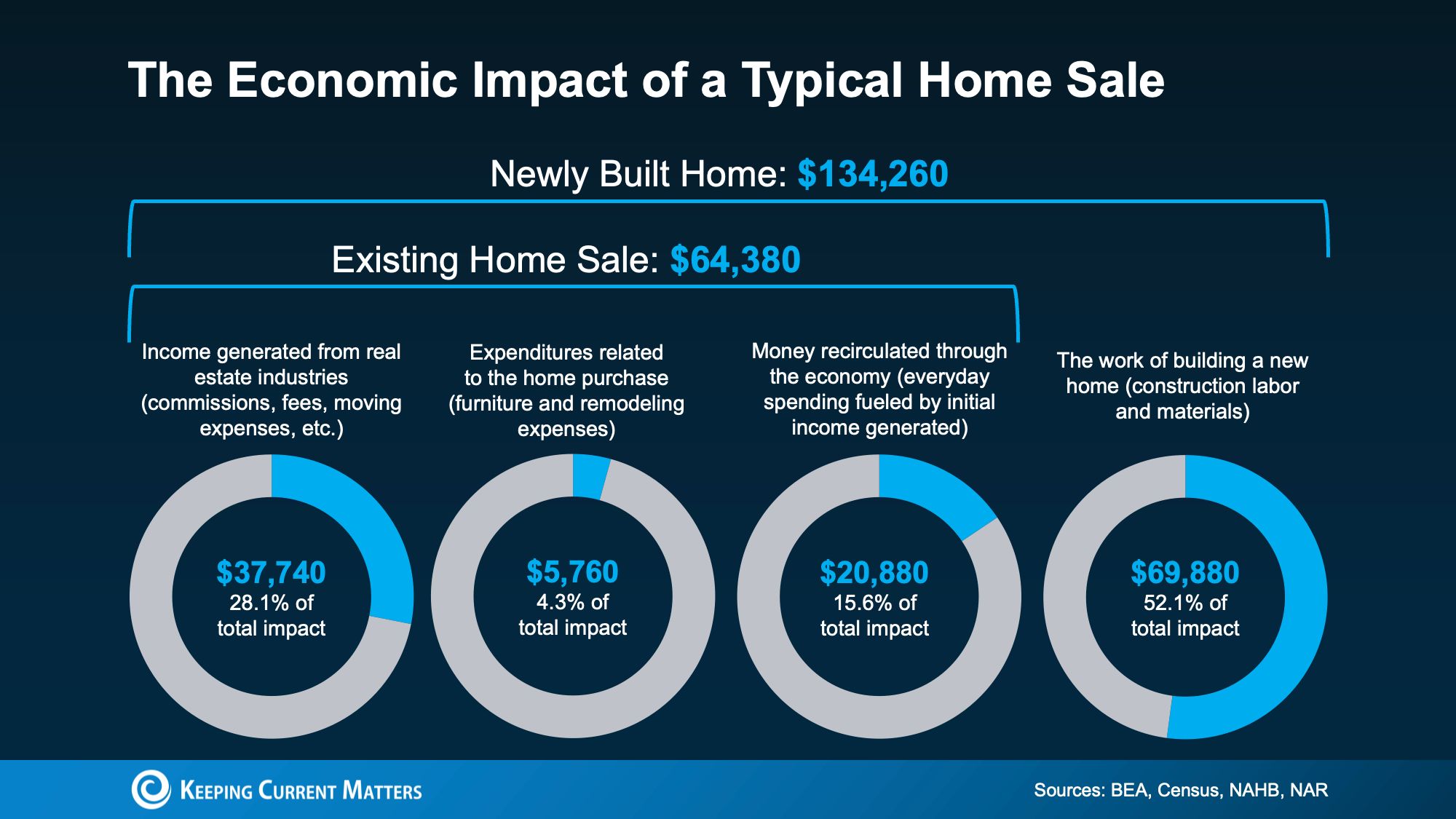
More than half of that economic impact comes from the construction of a new home itself. The remainder supports real estate-related services—such as real estate professionals, lenders, and other local businesses—as well as the purchases homeowners often make after moving, including furniture, appliances, and home improvements.
The impact doesn't end with the closing table. As those businesses earn revenue, they reinvest it by hiring employees, purchasing goods and services, and supporting other local businesses. That creates a ripple effect, allowing a single home sale to generate economic benefits far beyond the transaction itself.
One Home Sale Supports Many Local Jobs
Every home sale supports a wide network of local professionals. From contractors and inspectors to lenders, movers, appraisers, and real estate agents, each transaction helps keep people employed and local businesses thriving. As Lawrence Yun, Chief Economist at NAR, explains:
"More home sales create more economic activity throughout the community. From landscaping and moving services to furniture purchases, mortgage lending, and many other local businesses, each transaction helps support jobs and stimulates spending."
When you buy or sell a home, you're doing more than reaching your own goals—you're helping support the people and businesses that make your community thrive. Every transaction helps keep local professionals working and money flowing through the local economy, creating benefits that extend well beyond the closing table.
Your Home Move Makes an Even Bigger Difference
The economic impact of your home purchase or sale can vary depending on where you live. To illustrate the difference, here's how much a typical newly built home contributes to the economy in each state.
While the national average is about $134,000 in local economic activity, the impact is even greater in some states (see map below).
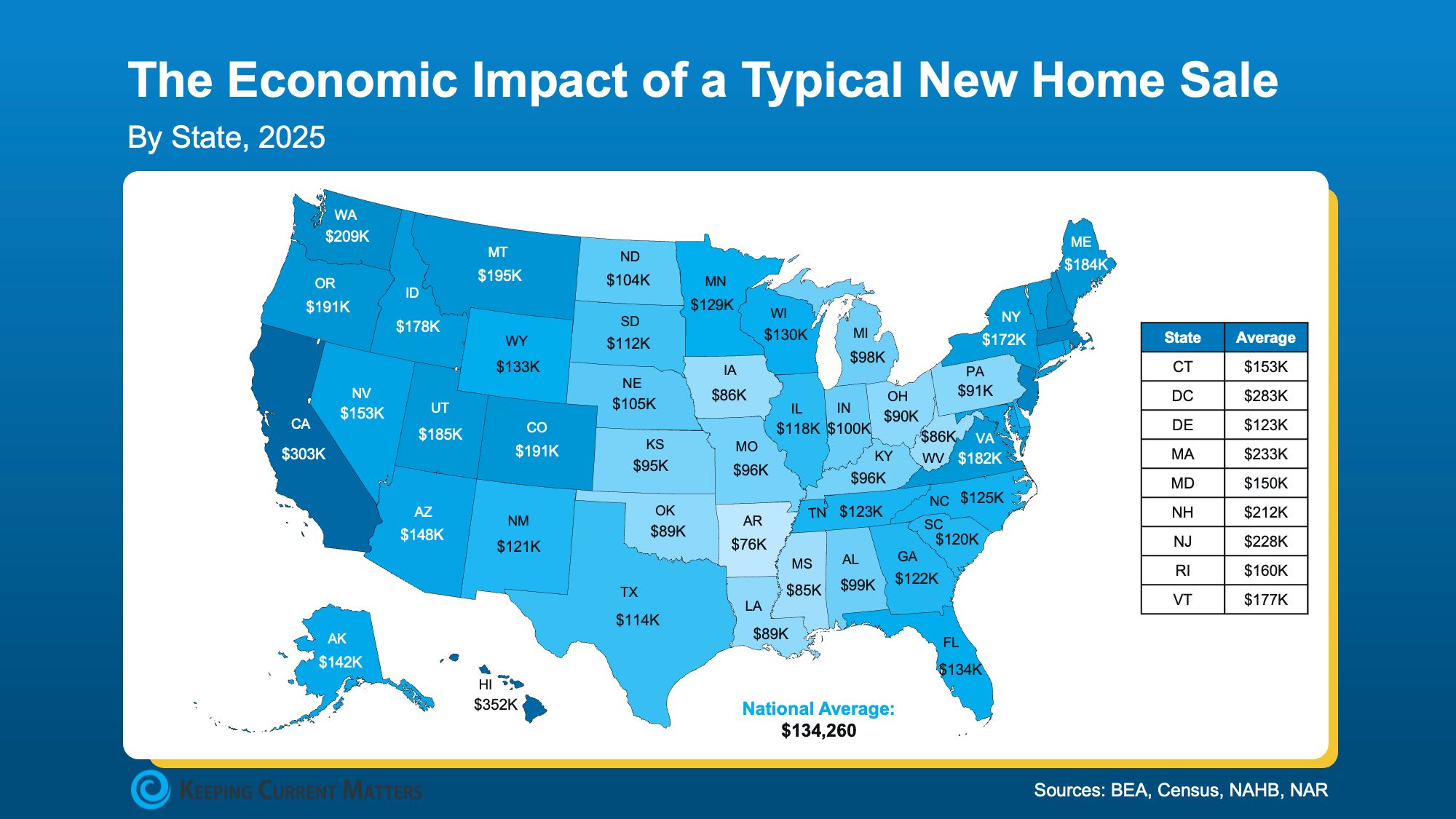
In some states, the impact is especially significant. A typical newly built home sale generates more than $300,000 in economic activity in California and exceeds $350,000 in Hawaii. Even in the most affordable states, each sale still contributes tens of thousands of dollars to the local economy.
Curious about the impact where you live? A local real estate professional can show you how much a typical home sale contributes in your area.
Bottom Line
Buying or selling a home is more than a personal milestone—it's also an investment in the community around you. Every move helps support local businesses, creates jobs, and contributes to economic activity that benefits your neighbors. If the timing is right for your next move, connect with a trusted local real estate agent. You'll not only take the next step toward your own goals, but you'll also make a positive impact that reaches much farther than you might realize.
Categories
Recent Posts


GET MORE INFORMATION
