
Want to Sell Without Dropping Your Price? Here's Another Option

In today’s housing market, more sellers are turning to price reductions, particularly when their homes have been sitting on the market without generating much buyer interest.
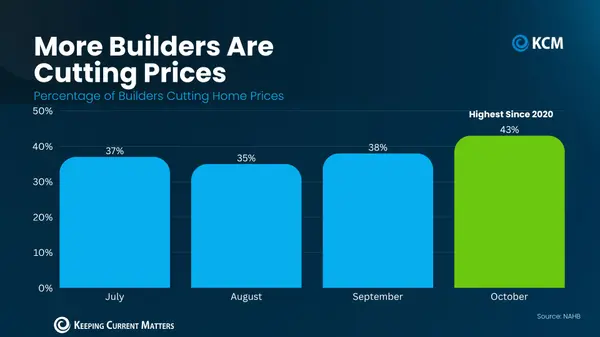
According to HousingWire Data, 43% of sellers are choosing to lower their asking prices—the highest percentage in four years. But what if there’s another strategy that could protect more of your equity while making your home just as attractive, or even more appealing, to potential buyers?
That’s where a mortgage rate buydown comes into play.
Buyers Are Looking for a Better Deal
To understand why sellers may need to be more flexible, it helps to look at how today’s housing market is shifting.
According to Redfin, September saw 63% more sellers than buyers in the market. With more homes available and fewer buyers competing for them, purchasers are gaining negotiating power. And with mortgage rates continuing to stretch affordability, many buyers are taking advantage of that leverage to negotiate better terms and get more value for their money.
One of the biggest factors buyers are negotiating today? The asking price.
Buyers want to feel confident they’re getting a good deal while keeping their monthly mortgage payments manageable. And since they have little control over mortgage rates, negotiating a lower purchase price often seems like the most practical solution.
But smart sellers know that flexibility doesn’t always require a price reduction. Offering to cover a buyer’s mortgage rate buydown could be a more effective strategy for both sides.
How Does a Mortgage Rate Buydown Work?
A mortgage rate buydown allows a seller to contribute money at closing to help reduce the buyer’s interest rate. By covering some of the interest costs upfront, the seller can help the buyer secure a lower monthly mortgage payment. With affordability remaining a major concern, this incentive can be especially attractive to today’s homebuyers.
- Temporary Rate Buydowns: Reduce the buyer’s mortgage interest rate for the first few years before returning to the original rate. The longer the reduced-rate period, the higher the upfront cost. This option may appeal to buyers who anticipate refinancing in the future, although refinancing isn't guaranteed.
- Permanent Rate Buydowns: Lower the mortgage interest rate for the entire loan term through upfront payments known as "discount points." Each point typically costs 1% of the loan amount. According to FICO, one point may reduce the interest rate by approximately 0.25 percentage points, although the actual reduction varies by lender and market conditions. This option can be especially beneficial for buyers planning to stay in their home long-term.
Same Investment, Different Outcomes
Here’s why this strategy can benefit both buyers and sellers. Offering a mortgage rate buydown can help your home stand out in a competitive market while potentially providing buyers with greater monthly savings than a traditional price reduction.
To see how this works, let’s look at a simple example.
Suppose you’re prepared to offer a $10,000 concession to help close the deal. Here are three different ways you could use that money and how each might affect a buyer with a $420,000, 30-year fixed-rate mortgage at 7% interest:
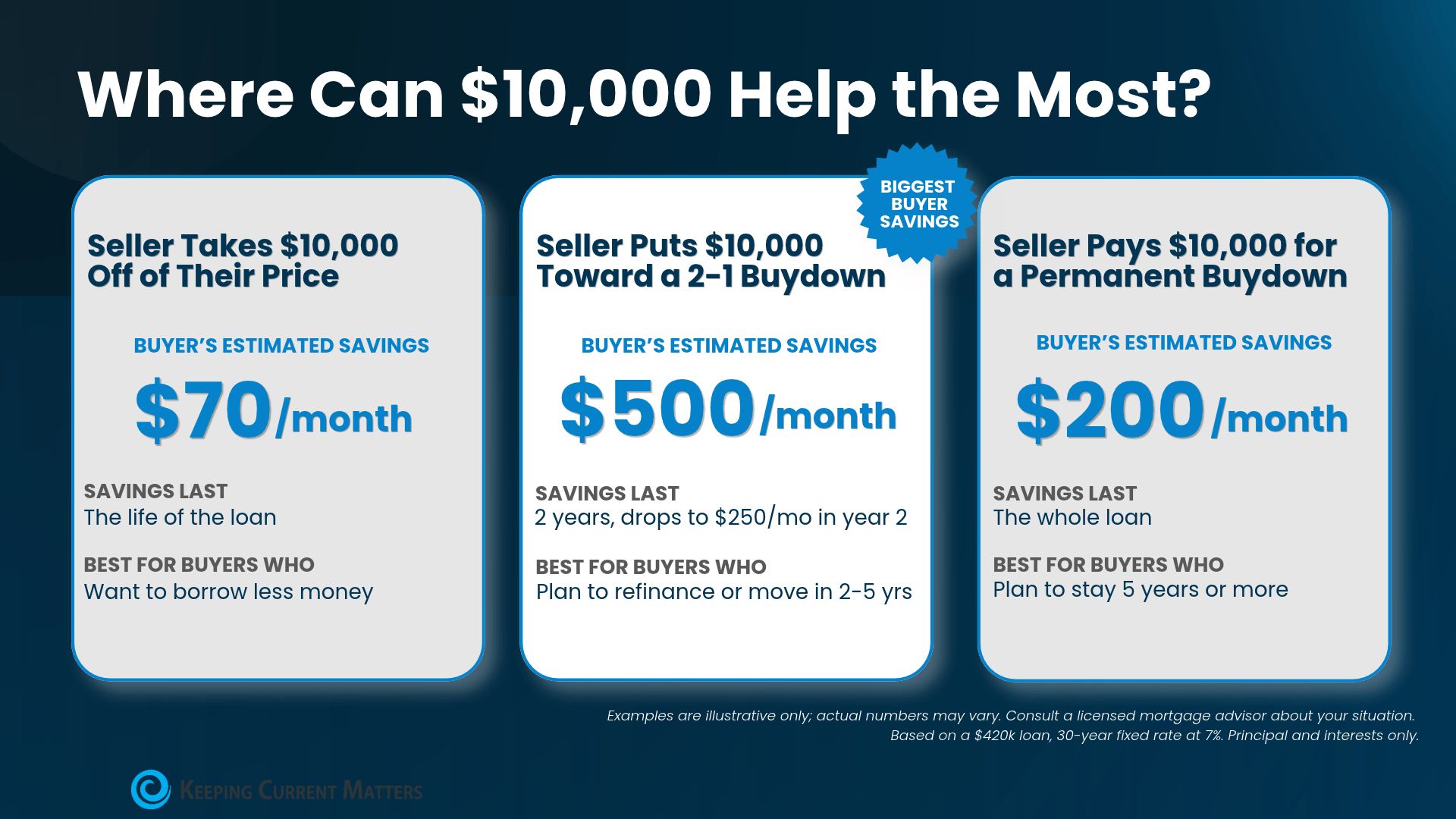
The seller contributes the same $10,000, but a 2-1 rate buydown could give the buyer roughly eight times more in monthly savings during the first year compared to a price reduction.
And because most buyers focus on what they can comfortably afford each month, those immediate savings can make a home significantly more appealing.
That’s why a mortgage rate buydown can be a smart alternative to lowering your asking price. By offering the same amount as a seller concession, you could help buyers achieve greater monthly savings, making your home more attractive without necessarily reducing the sale price. For buyers focused on affordability, those upfront savings may carry more value than a traditional price cut.
The best approach is to work with your real estate agent and the buyer’s lender to evaluate both strategies and determine which option delivers the greatest benefit.
Key Considerations Before You Decide
- Seller Contribution Limits: Mortgage loan programs have specific guidelines that limit how much sellers can contribute toward a buyer’s closing costs and rate buydowns.
- Additional Buyer Requests: Offering a rate buydown doesn’t prevent buyers from negotiating other concessions, such as repairs or additional closing cost assistance, subject to loan program limits.
- Highlight the Incentive: Including a potential rate buydown in your listing can help attract attention by letting buyers and their agents know this financing incentive is available.
- Plan Ahead: Your real estate agent can help you compare rate buydowns, price reductions, and other selling expenses before offers arrive, allowing you to negotiate confidently and make informed financial decisions.
As Lawrence Yun, Chief Economist at the National Association of Realtors (NAR), explains:
“Sellers need to adjust their expectations to reflect current local market conditions, which may mean offering price reductions or other incentives to attract potential buyers.”
Sellers who offer incentives like mortgage rate buydowns can make a real difference by helping buyers where it matters most: their monthly housing costs.
Bottom Line
If you're looking to attract more buyers, lowering your asking price isn't the only strategy worth considering. A mortgage rate buydown could make your home more appealing by helping buyers reduce their monthly payments, particularly during the first few years of their mortgage.
Before making a price adjustment, let's explore which incentives could give buyers the financial relief they're looking for while helping you protect your equity and maximize your sale.
Categories
Recent Posts
GET MORE INFORMATION
