

Your First Home May Be Closer Than You Think
For many first-time buyers, homeownership can feel like it’s always a few years away. Building up enough savings for a down payment takes time, and every year spent renting can make buying a home seem even further out of reach.
But your first home may be closer than you think. There are two key decisions within your control that could help you become a homeowner sooner, even with affordability still challenging in today’s market.
How Long It Really Takes To Buy
First, let’s clarify what “breaking even” actually means. It’s the point when the total cost of owning a home is roughly equal to what you would have spent renting over the same amount of time. Once you move beyond that point, owning can become the more cost-effective option. Kara Ng, Senior Economist at Zillow, explains:
“Buyers should think about not just when they can afford to buy, but how long they’d need to stay before owning makes more financial sense than renting.“
So, how long does it typically take to reach that break-even point? And is there a way to get there faster? Let’s look at the numbers.
According to Zillow, saving for a 20% down payment takes about 8.5 years on average, followed by roughly 6.2 years before the cost of owning catches up with renting. Altogether, that’s nearly 15 years. But those numbers are based on two big assumptions: you’re buying a median-priced home and putting a full 20% down.
Adjust either one, and you could shorten your path to homeownership. Adjust both, and that timeline could get even shorter. Of course, the numbers also vary by location, since home prices and rental costs can look very different from one market to the next.
A Starter Home Could Cut Your Timeline in Half
A starter home generally refers to a home priced in the lower third of the local market. These are often condos, townhomes, or single-family homes that may be a little smaller or older than other properties nearby.
Choosing a starter home instead of a median-priced property can significantly shorten your path to homeownership. It may sound simple, but the difference can be bigger than you’d expect. A lower-priced home means you typically need less money upfront, so you may not have to spend as many years saving.
According to Zillow, the nationwide timeline to save for a starter home and reach the point where owning makes more financial sense than renting is about 7.2 years — roughly half the time compared with a mid-priced home (see graph below):
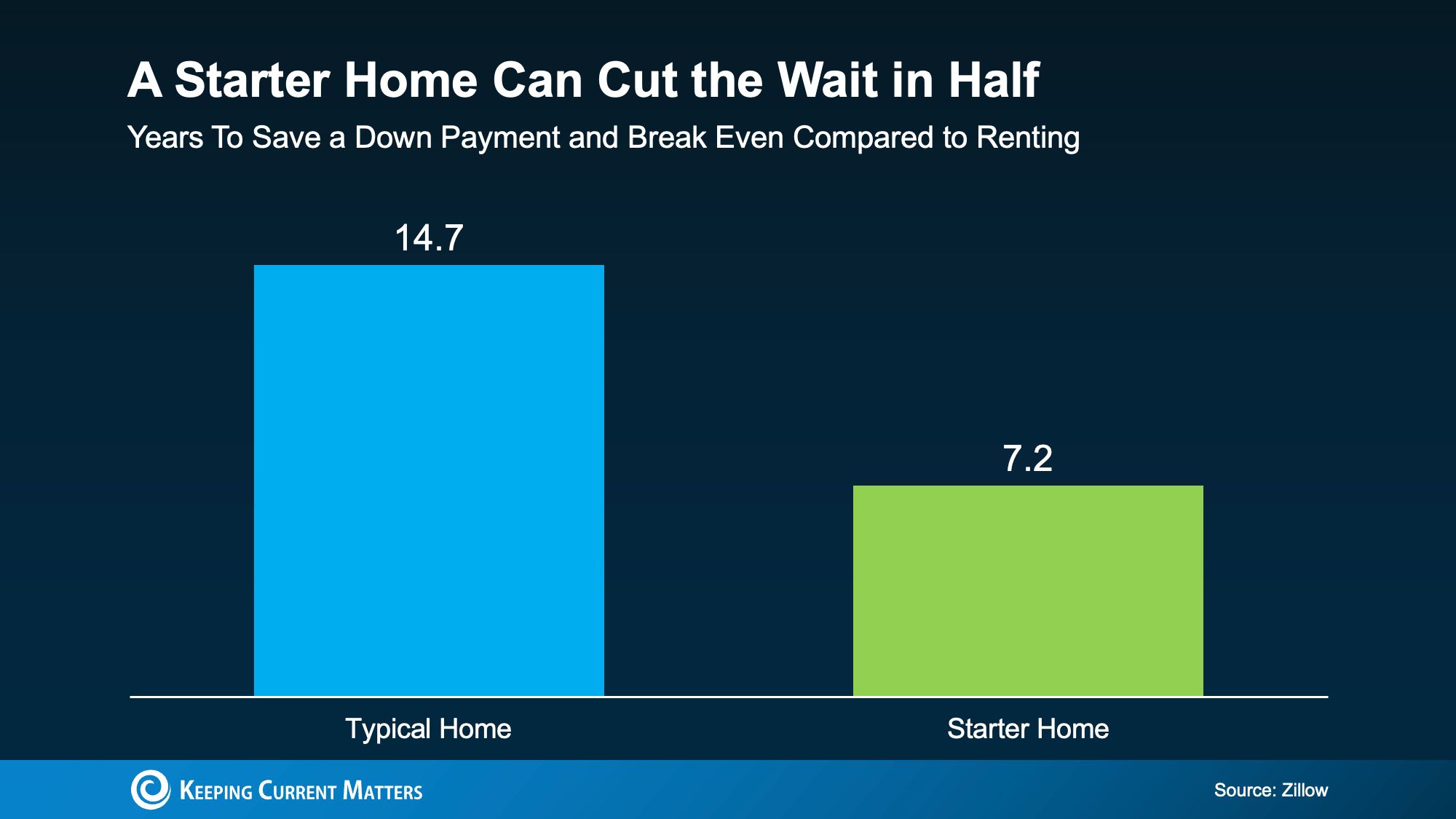
That breaks down to roughly 4.6 years of saving and another 2.6 years to reach the break-even point. It doesn’t eliminate today’s affordability challenges, but it could shave years off your path to homeownership. And if you’ve already been putting money aside, you may be closer to buying your first home than you realize.
20% Down Isn’t Always Necessary
Like many first-time buyers, you may think you need a 20% down payment before buying a home is even an option. But in many cases, that simply isn’t true.
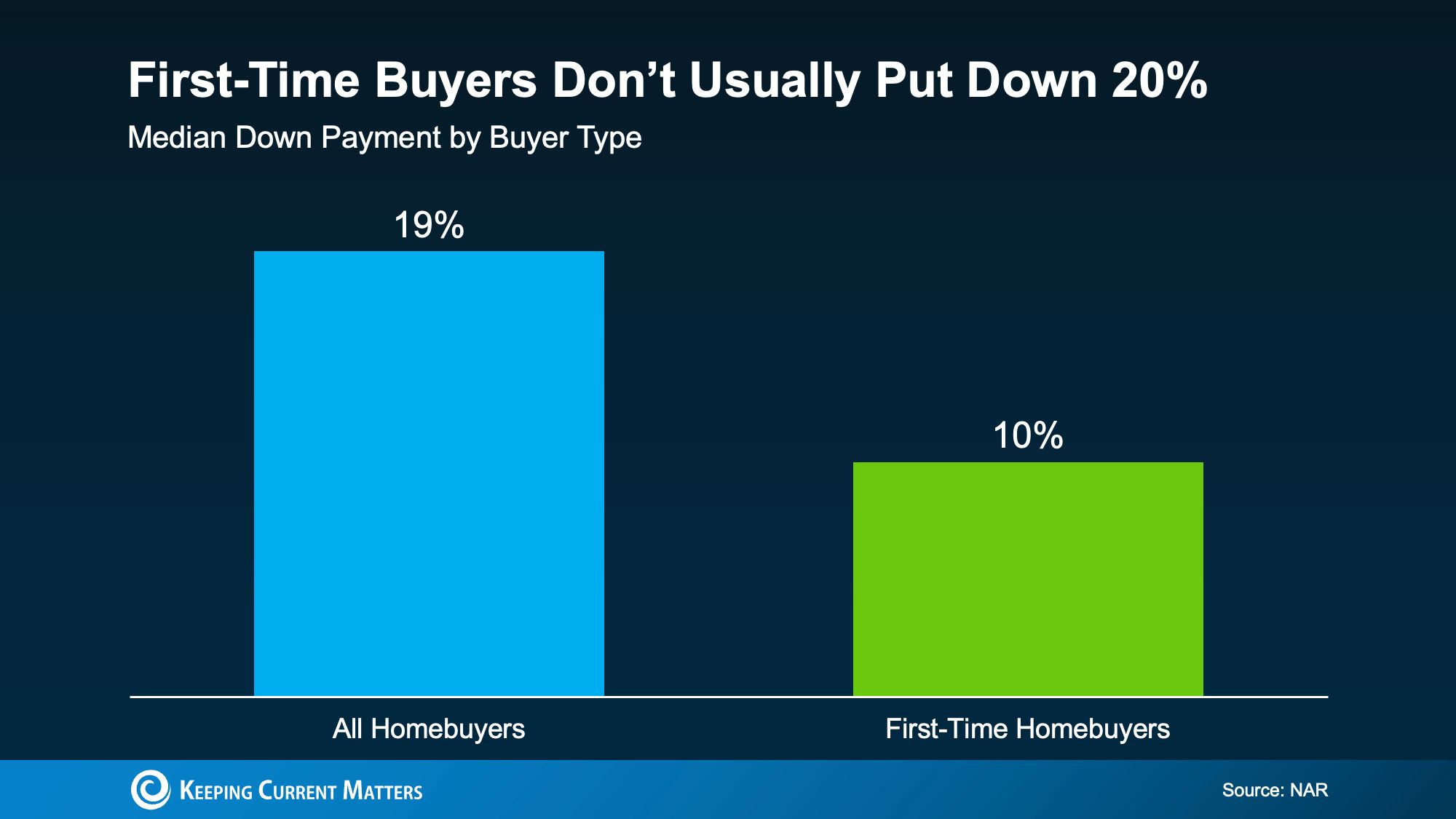
In fact, most first-time buyers put down much less than 20%. According to the National Association of Realtors, the median down payment for first-time homebuyers is just 10% (see graph below):
And some loan programs allow for even smaller down payments. Qualified buyers may be able to put as little as 3% down with a conventional loan or 3.5% with an FHA loan. Eligible veterans and certain rural buyers may even qualify for options with no down payment at all.
There may also be programs that can help with the upfront costs of buying. Down Payment Resource tracks 2,746 homebuyer assistance programs nationwide, and in some cases, multiple programs can even be combined:
“Some buyers may be able to combine multiple assistance programs to help lower their upfront costs. This means using more than one eligible source of funding toward the same home purchase.”
Combine a more affordable home, a smaller down payment, and available assistance programs, and the timeline you thought it would take to buy could become a whole lot shorter.
Bottom Line
Homeownership may be closer than you think. Choosing a more affordable starter home, exploring lower down payment options, and taking advantage of available assistance could help you buy sooner than you expected.
If you’re wondering what that could look like for your budget, let’s connect. I can help you explore starter homes in your area and see what options may make sense for you.
Categories
Recent Posts

GET MORE INFORMATION
