

The One Factor Driving Today’s Home Prices

You've probably heard that home prices are starting to cool—and that's true at the national level. But when you take a closer look at local markets, the story becomes much more nuanced.
Some areas are still seeing healthy price appreciation, others have leveled off, and a handful have experienced modest declines. So, what's driving these differences?
It All Comes Down to Inventory
The biggest factor shaping home prices right now is inventory.
When more homes are available for sale, buyers have more choices. With more options comes less competition, and with less competition, sellers have less leverage to drive prices higher.
On the other hand, when the supply of homes is limited, buyers are forced to compete for fewer listings. That increased competition puts upward pressure on home prices and it's a trend we're seeing play out in many markets today.
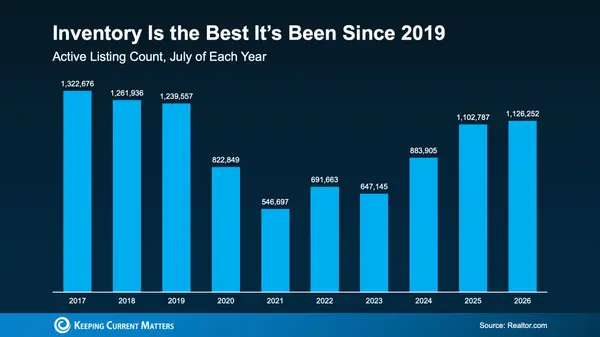
Markets where inventory has returned to—or even surpassed—pre-pandemic levels are generally seeing home prices level off or dip slightly. Meanwhile, markets where inventory remains well below 2019 levels continue to experience price growth.
Markets where inventory has climbed back to, or above, normal pre-pandemic levels are seeing prices flatten or fall slightly. Markets where inventory is still well below those 2019 benchmarks are still seeing prices rise.
Housing analyst Lance Lambert explains that markets with inventory still well below pre-pandemic levels—particularly in parts of the Northeast and Midwest—are generally continuing to see modest home price appreciation. Meanwhile, areas where the number of homes for sale has climbed above 2019 levels, including parts of Texas, Florida, and Colorado, are more likely to experience flat or slightly declining prices.
The Data Tells the Story
Compare today's inventory levels with where they were in 2019, and the trend becomes clear. In most states (shown in gray on the map below), the number of homes for sale is still below pre-pandemic levels. That's one of the main reasons home prices continue to rise in much of the country, even if the pace of appreciation has slowed.
The headlines, however, tend to focus on the handful of markets where prices have softened. Those areas share one important characteristic: inventory has recovered much more quickly. Let's take a closer look at how higher inventory is influencing home prices in those markets.
According to Realtor.com, 15 states and Washington, D.C., now have more homes for sale than they did before the pandemic. In several of those markets, inventory has climbed well above 2019 levels, as shown in orange on the map below.
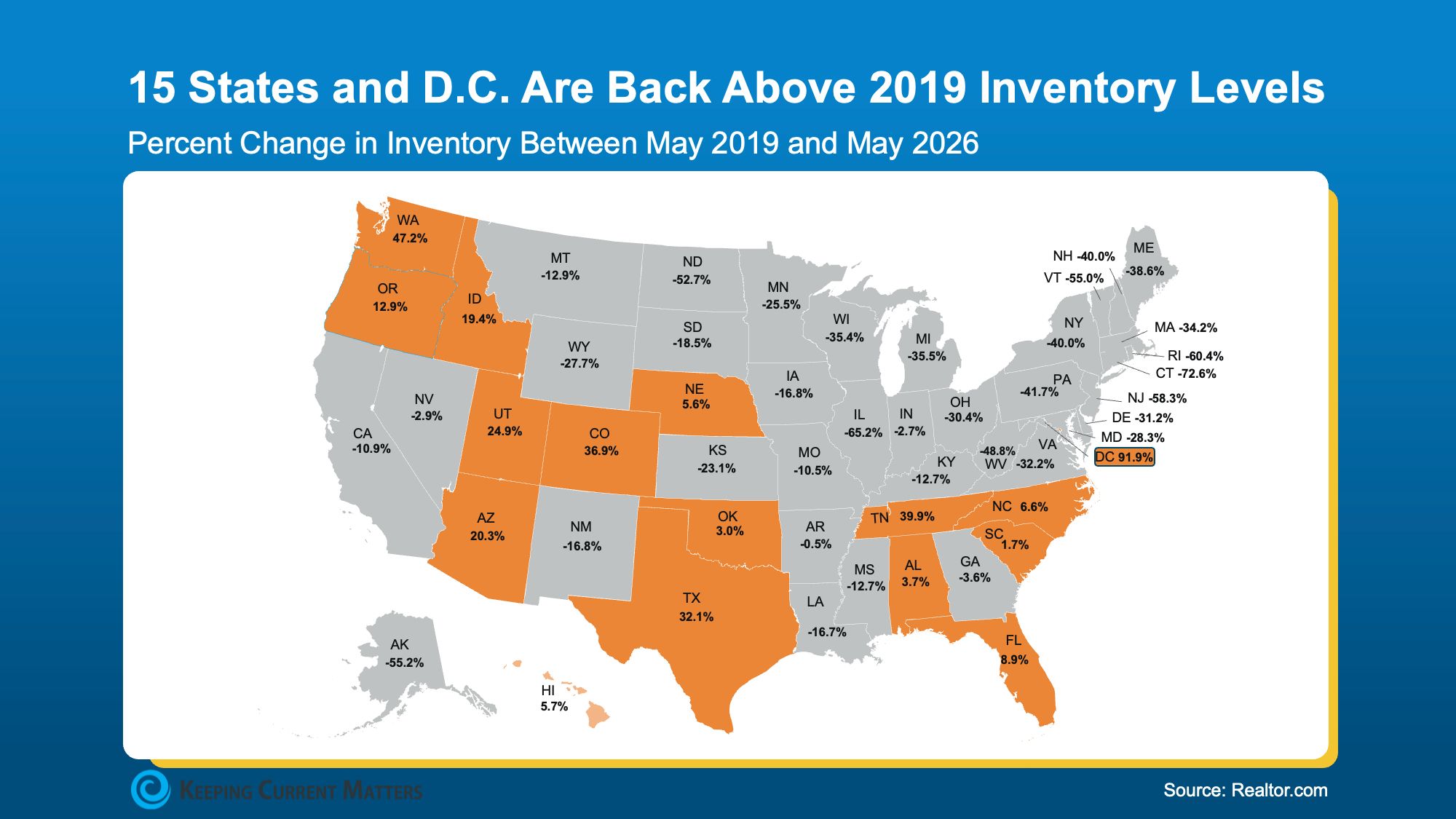
Now let's compare that with the latest data from the Federal Housing Finance Agency (FHFA) on home price changes over the past year. Pay close attention to the states highlighted in orange on the next map.
Notice how they closely match the areas where inventory has climbed above pre-pandemic levels?
That's no coincidence. As the supply of homes increases, competition among buyers tends to ease, which slows price growth and, in some markets, leads to modest price declines.
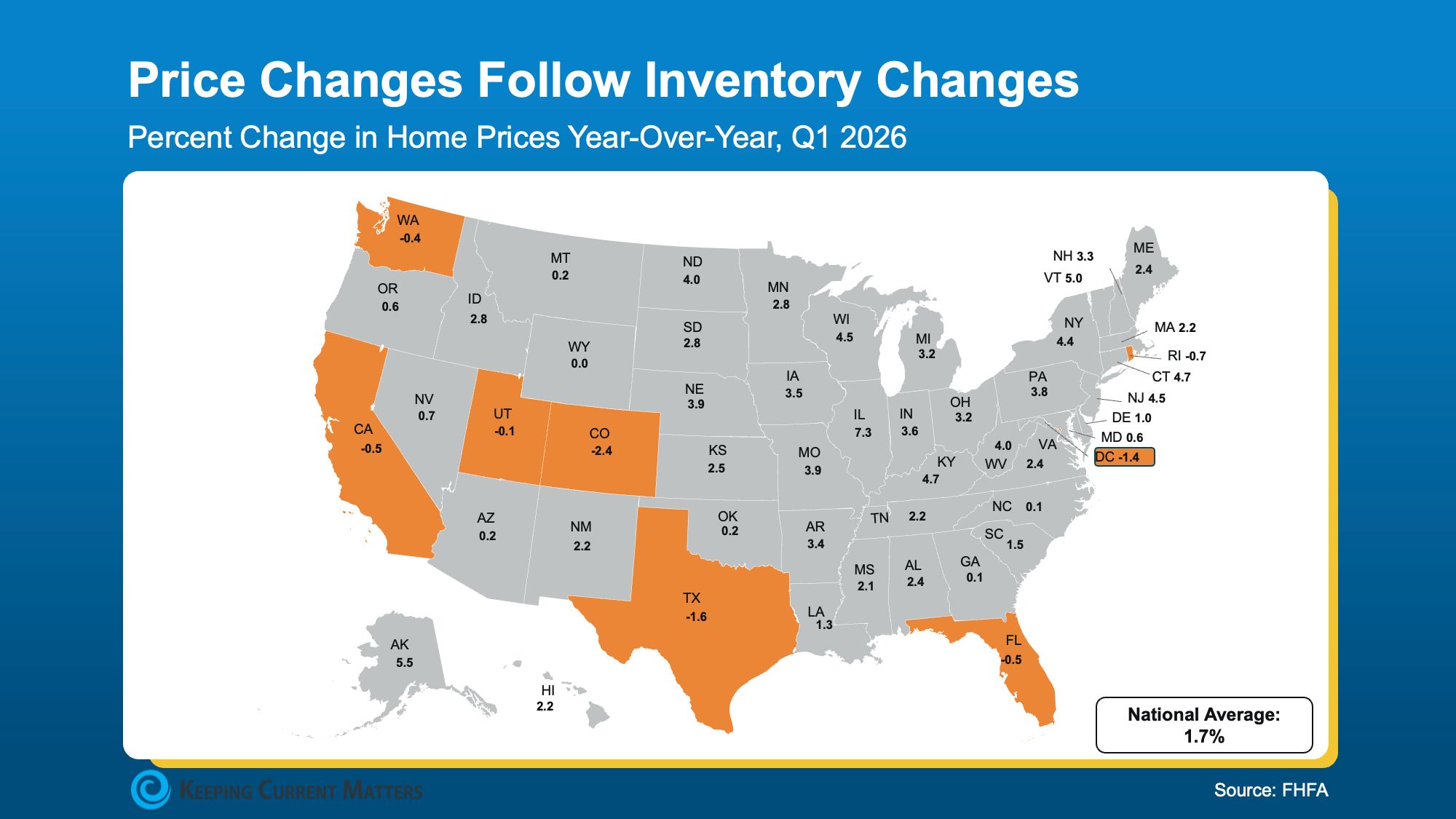
The national home price growth rate of 1.7% is accurate, but it reflects the average of two very different market conditions: a small number of areas experiencing modest price declines and the vast majority of markets where home prices continue to rise.
What This Means for Buyers and Sellers
If you're in the market to buy a home, where you're looking can make all the difference. In areas like Texas, Colorado, and Florida, rising inventory has created more opportunities for buyers, with increased selection and greater room to negotiate. Meanwhile, in inventory-constrained markets like much of the Northeast, competition remains strong and desirable homes continue to move quickly.
If you're selling, pricing your home correctly is more important than ever. In markets where inventory has increased, an overpriced home is more likely to sit on the market, often leading to price reductions and a lower final sale price. In areas where inventory remains limited, sellers still have an advantage, but a well-priced home is the best way to attract qualified buyers and maximize interest from the start. That's why working with a local real estate professional who understands your market can make all the difference.
Bottom Line
National housing trends only tell part of the story. What's happening with home prices in your local market depends largely on inventory and buyer demand in your area. Whether you're buying or selling, understanding those local conditions is key to making informed decisions.
A knowledgeable local real estate agent can help you navigate today's market and develop a strategy that's tailored to your goals.
Categories
Recent Posts




GET MORE INFORMATION
