

Home Price Growth Slowed. Is It Picking Up Again?

For more than a year, headlines have warned that home prices were headed for a crash. But the latest data tells a different story. Price growth appears to be gaining momentum again, and that shift could create new opportunities—whether you're planning to buy or thinking about selling.
The Market May Be Starting To Shift
Over the past two years, home price growth has gradually cooled, falling from roughly 7% in mid-2024, according to Redfin (see graph below). But the latest data tells an interesting story. The slowdown appears to have reached its bottom, and home price appreciation may be starting to gain momentum once again.
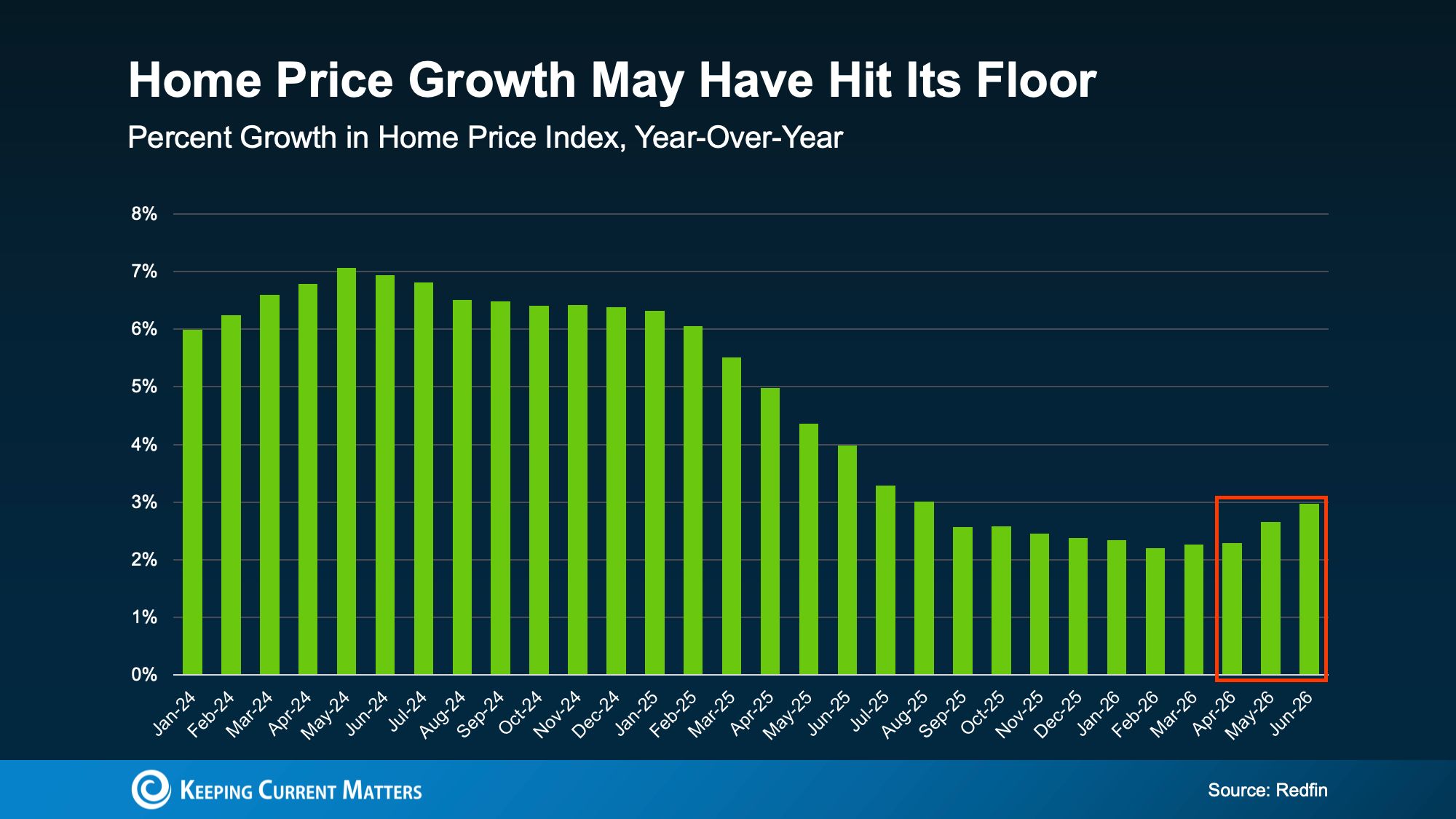
While a few months of data alone don't confirm a long-term trend, several other indicators suggest home prices could continue moving higher.
One encouraging sign is that fewer housing markets are experiencing price declines. According to ResiClub and Zillow, about 36% of the nation's 300 largest housing markets saw prices fall by the middle of last year. Since the beginning of this year, that number has steadily declined. Today, only 23% of those markets are seeing modest price drops (see graph below).
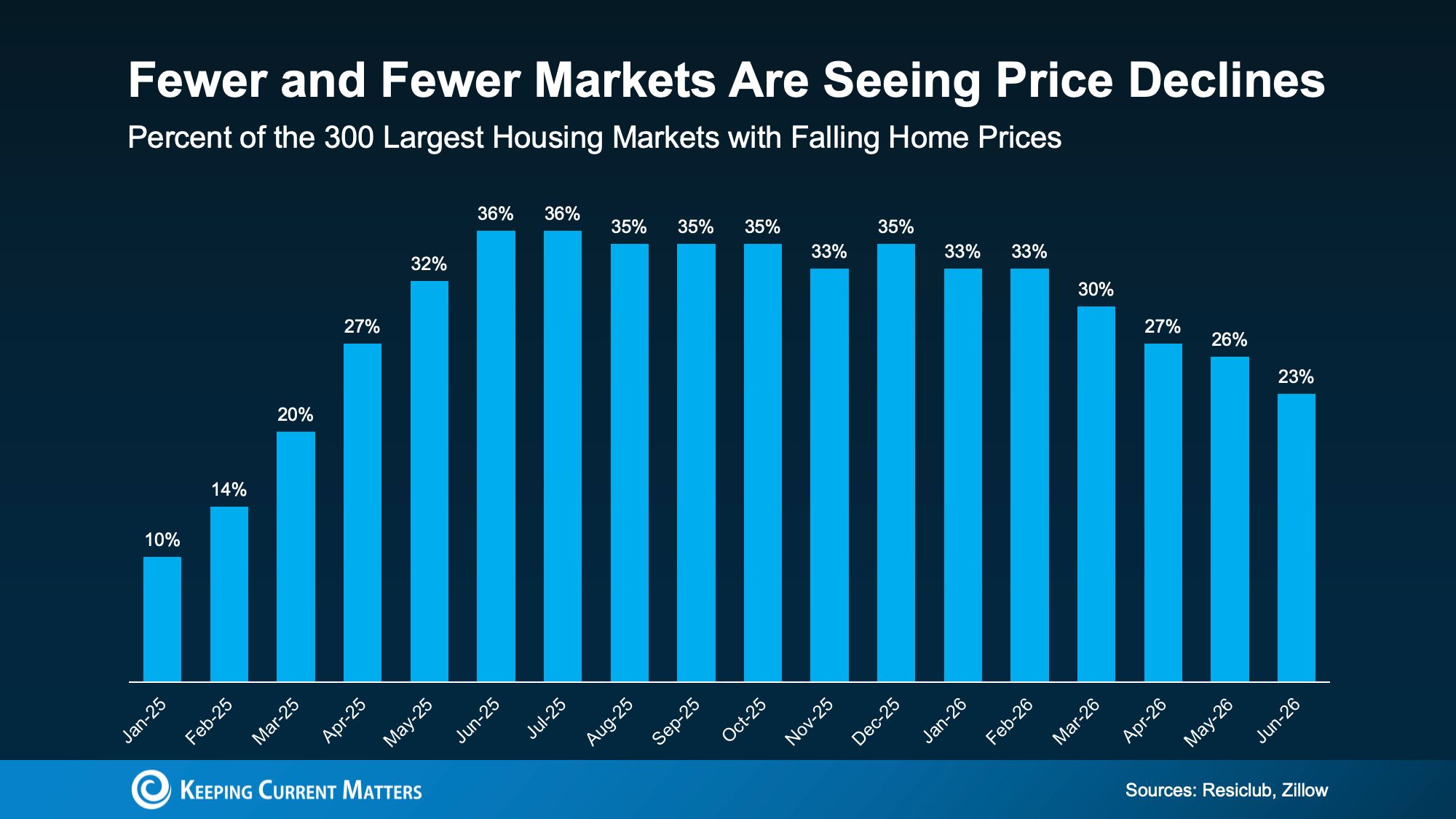
As fewer housing markets experience price declines, more markets are returning to positive price growth.
Looking ahead, forecasts suggest this trend could continue. On average, industry experts expect home prices to increase by about 2.3% nationwide this year. Reaching that projection would require price appreciation to strengthen during the second half of 2026—a sign that momentum may already be building.
Real Estate Is Still a Local Market
While national home prices appear to be gaining a bit of momentum, that doesn't necessarily reflect what's happening in your local market. Real estate is highly local, and price trends can vary significantly from one neighborhood to the next.
National home prices reflect an average across hundreds of local housing markets. While some areas are seeing prices rise more quickly, others are still experiencing slower growth or modest declines. One reason the national average appears to be improving is that more metro areas are now posting positive price gains.
Not long ago, the nation's largest metros were nearly evenly divided, with about half seeing prices increase and half seeing prices decline. Today, that balance appears to be shifting. According to Redfin, more than half of the major metro areas recorded home price gains just last month (see graph below).
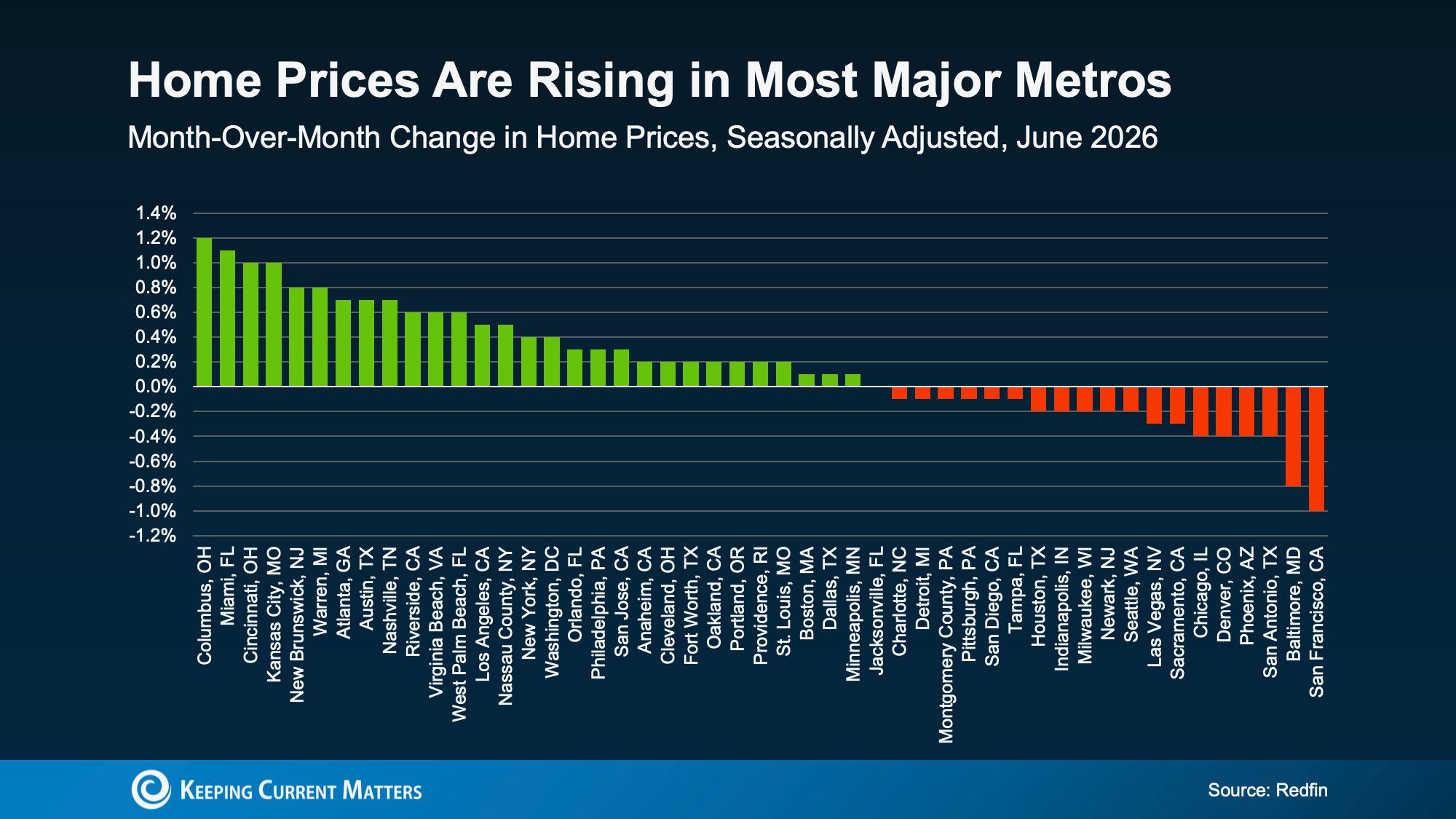
As Selma Hepp, Chief Economist at Cotality, explains:
"Local housing markets continue to move in different directions. While national home price growth has remained relatively steady since the beginning of the year, some areas—particularly more affordable Midwestern markets and Western markets supported by strong job and income growth—are seeing home prices accelerate at a faster pace."
What This Means for Buyers and Sellers
National headlines only tell part of the story. The best way to understand what's really happening is to look at your local market.
A trusted real estate agent can help you interpret the latest trends, explain what they're likely to mean for home prices in your area, and position you to make informed decisions before the market shifts.
If you’re buying: Slower home price growth has created more opportunities to negotiate and made it easier to budget for your purchase. If prices are beginning to accelerate in your local market, buying sooner could mean paying less than if you wait until later this year.
If you already own a home: You've continued building equity, even as home price growth has moderated. If appreciation gains momentum, your equity could grow even faster. Lawrence Yun, Chief Economist at the National Association of Realtors (NAR), estimates the typical homeowner will add about $16,000 in housing wealth this year. And if you're considering selling, strengthening price trends are an encouraging sign. Just keep in mind that many local markets remain balanced, giving buyers plenty of negotiating power.
Home price growth has cooled significantly, but recent data suggests momentum may be starting to build again. Whether you're buying, selling, or simply keeping an eye on the market, let's connect to discuss what's happening in our local area and how today's trends could impact your next move.
Bottom Line
Home price growth has cooled from the rapid pace of the past few years, but recent data suggests the market may be gaining momentum again. Because every market is different, the best way to understand what these trends mean for you is to look at what's happening locally. Whether you're buying, selling, or simply planning ahead, connecting with a trusted real estate professional can help you make confident, informed decisions based on your area's market conditions.
{ "@context": "https://schema.org", "@type": "FAQPage", "mainEntity": [ { "@type": "Question", "name": "Are home prices starting to rise again?", "acceptedAnswer": { "@type": "Answer", "text": "Recent housing data suggests home price growth may be gaining momentum after a period of slower appreciation. While it's too early to call it a long-term trend, several indicators point toward stronger price growth in many markets." } }, { "@type": "Question", "name": "Didn't experts say home prices were going to crash?", "acceptedAnswer": { "@type": "Answer", "text": "Although many headlines predicted falling home prices, the market has remained resilient. Instead of a nationwide decline, price growth slowed before showing signs of strengthening again." } }, { "@type": "Question", "name": "What evidence suggests the housing market is improving?", "acceptedAnswer": { "@type": "Answer", "text": "Fewer housing markets are experiencing price declines, and more metro areas are reporting home price gains. Industry forecasts also call for modest nationwide appreciation through the remainder of the year." } }, { "@type": "Question", "name": "How many housing markets are still seeing price declines?", "acceptedAnswer": { "@type": "Answer", "text": "According to ResiClub and Zillow, about 23% of the nation's 300 largest housing markets are currently experiencing modest price declines, down from roughly 36% a year ago." } }, { "@type": "Question", "name": "How much are home prices expected to increase this year?", "acceptedAnswer": { "@type": "Answer", "text": "On average, housing experts project home prices will rise approximately 2.3% nationwide this year, although appreciation will vary by local market." } }, { "@type": "Question", "name": "Does the national housing market reflect what's happening in my neighborhood?", "acceptedAnswer": { "@type": "Answer", "text": "No. National home prices represent an average of hundreds of local markets. Your city's inventory, buyer demand, job growth, and affordability all influence home values in your area." } }, { "@type": "Question", "name": "Why do local housing markets perform differently?", "acceptedAnswer": { "@type": "Answer", "text": "Every market has unique economic conditions, housing supply, employment trends, and buyer demand. These local factors can cause prices to rise, level off, or decline independently of national trends." } }, { "@type": "Question", "name": "Is now a good time to buy a home?", "acceptedAnswer": { "@type": "Answer", "text": "It depends on your local market and personal goals. If home prices continue to appreciate in your area, purchasing sooner could help you avoid paying more later. Buyers should evaluate local inventory, financing, and affordability before making a decision." } }, { "@type": "Question", "name": "What does this market mean for homeowners?", "acceptedAnswer": { "@type": "Answer", "text": "Homeowners have continued building equity even as price growth slowed. If appreciation continues to strengthen, equity gains may accelerate, benefiting those who plan to sell or refinance in the future." } }, { "@type": "Question", "name": "Is it a good time to sell my home?", "acceptedAnswer": { "@type": "Answer", "text": "Strengthening home price trends can benefit sellers, but many markets remain balanced. Pricing your home correctly and understanding local buyer demand are key to maximizing your sale." } }, { "@type": "Question", "name": "How much equity is the average homeowner expected to gain this year?", "acceptedAnswer": { "@type": "Answer", "text": "Lawrence Yun, Chief Economist for the National Association of Realtors, estimates the typical homeowner could gain roughly $16,000 in housing wealth this year through home price appreciation." } }, { "@type": "Question", "name": "Why is working with a local real estate agent important right now?", "acceptedAnswer": { "@type": "Answer", "text": "A local real estate professional can explain what's happening in your specific market, interpret current pricing trends, and help you make informed buying or selling decisions based on neighborhood-level data rather than national averages." } } ] }
Categories
Recent Posts



GET MORE INFORMATION
