

Homeownership Is Getting Easier for Buyers
If you’ve been waiting and watching, this is the kind of news you’ve been hoping for.
Buying a home is becoming more attainable.
Monthly payments are starting to ease, and the pressure buyers have felt over the past few years is gradually lifting. While this doesn’t mean homeownership is suddenly within reach for everyone, in a market that’s been this challenging, even modest improvements are meaningful.
Home Affordability Is Showing Real Improvement
One of the clearest ways to see this shift is by examining how much income it takes to afford a home.
According to Zillow, housing is generally considered affordable when total costs stay at or below 30% of your monthly income. This includes your mortgage, property taxes, insurance, and basic maintenance.
For the past several years, housing costs consistently exceeded that benchmark, putting homeownership out of reach for many buyers. Today, however, conditions are gradually rebalancing. Research from Zillow
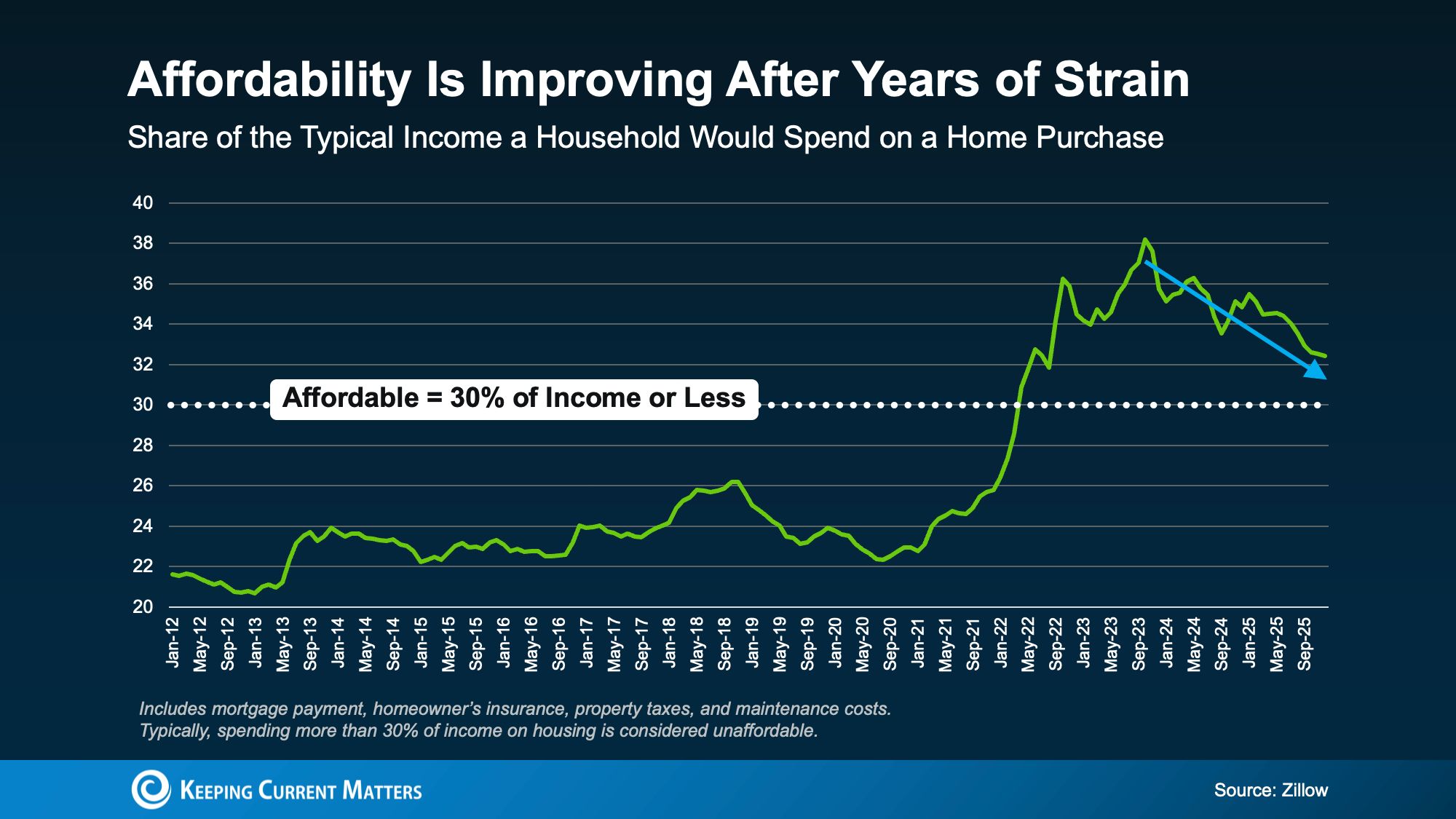
We’re not yet back to Zillow’s 30% affordability benchmark, so conditions remain tight. That said, the trend is clearly moving in a more positive direction.
What’s Driving Better Housing Affordability
So what’s behind this shift? Much of the attention has been on mortgage rates and how far they’ve fallen over the past year. While that’s an important factor, it’s not the only one helping buyers. Several key trends are working in their favor right now. Here are three worth noting:
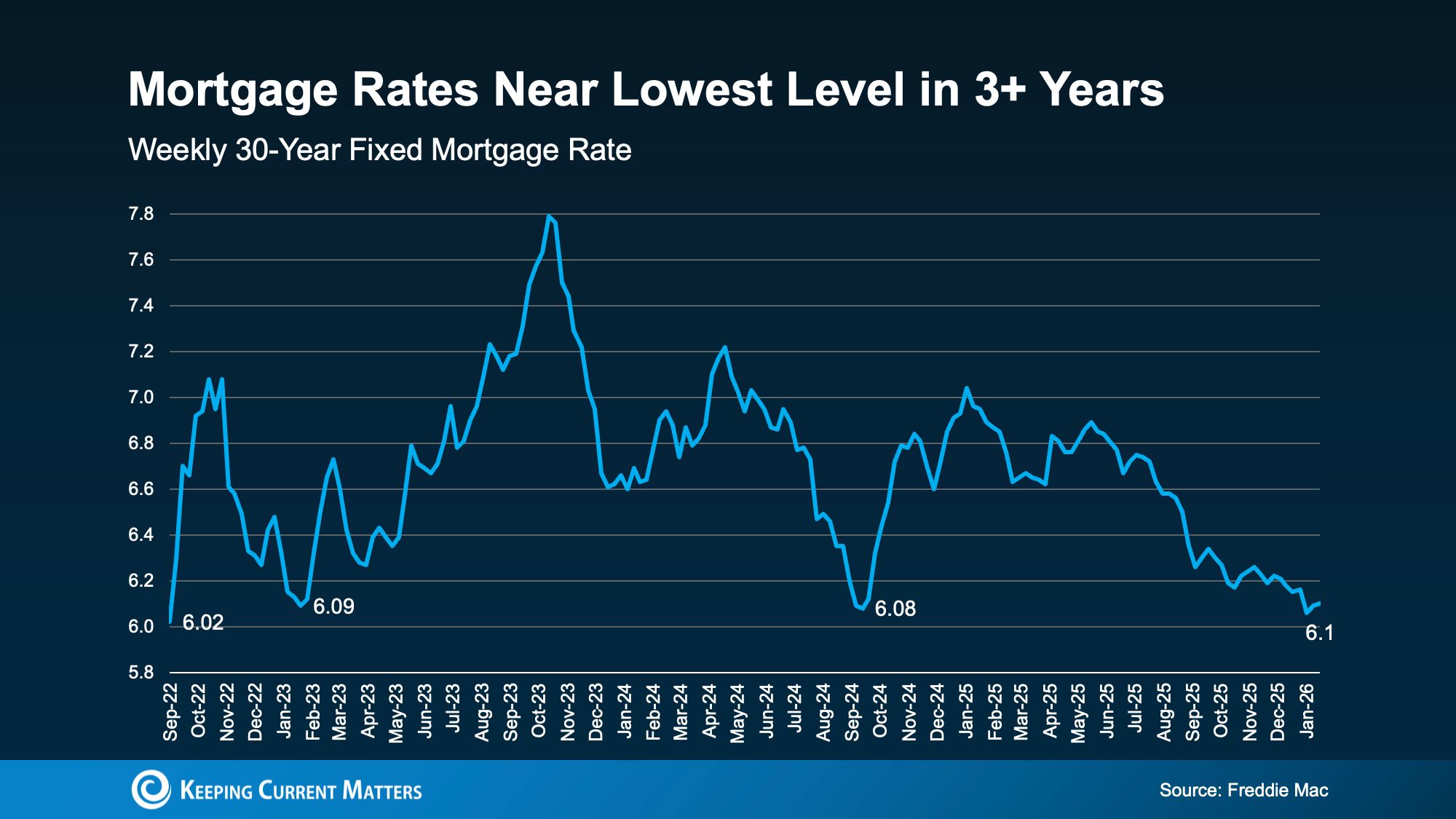
1. Mortgage rates have eased. Rates are near their lowest level in more than three years, helping reduce monthly payments (see graph below).
2. Home price growth has slowed. Home prices aren’t declining nationwide, but they’re rising at a much more moderate pace than in recent years. This means today’s buyers aren’t dealing with the rapid price spikes we saw before, helping keep payments more stable and the buying process more predictable.
3. Wages are rising faster than home prices.This shift is especially important. As Mark Fleming, Chief Economist at First American Financial Corporation, explains:
“When income grows faster than home prices, buyers gain more purchasing power—even if mortgage rates don’t fall significantly.”
None of this suddenly makes buying inexpensive, but it does help explain why the numbers are starting to make more sense for buyers than they did even a year ago. In simple terms, the pressures that weighed heavily on affordability over the past few years are finally beginning to ease. As Mark Fleming, Chief Economist at First American Financial Corporation, puts it:
“Affordability is still a challenge, but for the first time in years, market conditions are starting to move in the right direction. Mortgage rates may come down gradually, but stronger income growth compared to home prices is improving buying power—even in a higher-rate environment. This won’t change overnight, but the market is finally gaining steady momentum.”
Together, these three trends are why economists anticipate continued gains in affordability throughout 2026.
Where Affordability Is Improving First
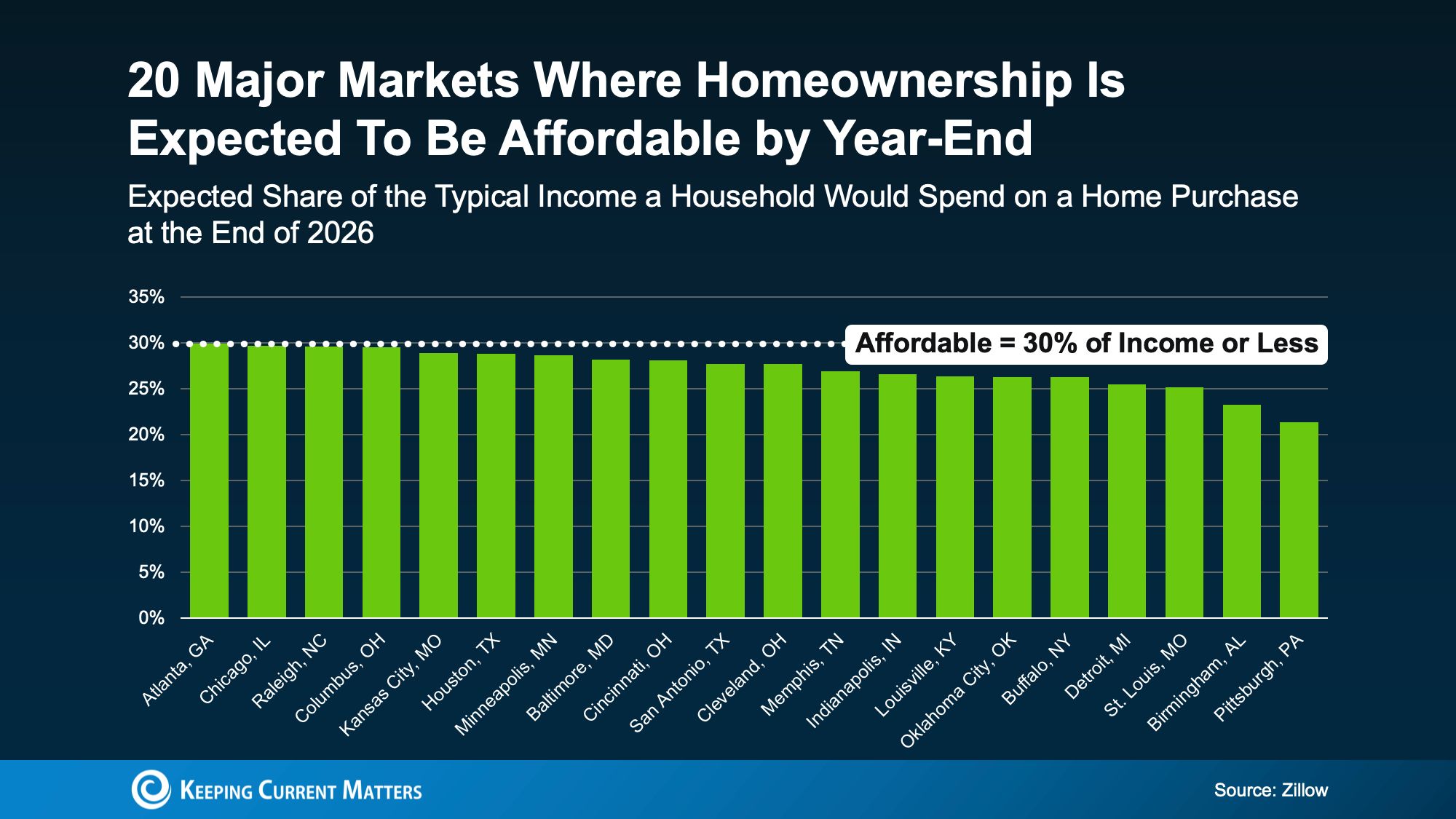
So how much improvement can buyers realistically expect? In some markets, the change could be meaningful. According to Zillow, several areas are projected to return to the affordability benchmark—spending 30% or less of income on housing—by the end of the year.
That doesn’t mean you need to live in one of these markets—or wait until year-end—to make a move. Many other areas are already experiencing meaningful improvements in affordability. A conversation with a local agent can help you understand what’s happening in your market and whether buying now makes sense.
Bottom Line
For the first time in quite a while, housing affordability is beginning to ease—and that’s a meaningful and encouraging shift for today’s buyers. After years of tight conditions and rising costs, the numbers are finally starting to move in a more balanced direction.
That said, this progress isn’t happening evenly across every market. Some areas are improving faster than others, which makes understanding what’s happening locally more important than ever. Real opportunities often show up first at the neighborhood level, not in national headlines.
If you’d like to see how these trends are playing out in your area—and what they could mean for your buying power—connect with a local real estate professional. A personalized look at your market could reveal options you didn’t realize were within reach.
{ "@context": "https://schema.org", "@type": "FAQPage", "mainEntity": [ { "@type": "Question", "name": "What benchmark does Zillow use to consider housing affordable?", "acceptedAnswer": { "@type": "Answer", "text": "Housing is generally considered affordable when total costs (mortgage, property taxes, insurance, and basic maintenance) stay at or below 30% of monthly income." } }, { "@type": "Question", "name": "How have housing costs trended in recent years relative to the affordability benchmark?", "acceptedAnswer": { "@type": "Answer", "text": "For several years, housing costs exceeded the 30% benchmark, but conditions are now gradually rebalancing in a more positive direction." } }, { "@type": "Question", "name": "What is one key factor driving better housing affordability besides mortgage rates?", "acceptedAnswer": { "@type": "Answer", "text": "Mortgage rates have eased to near their lowest level in more than three years, which helps reduce monthly payments." } }, { "@type": "Question", "name": "How has home price growth changed recently?", "acceptedAnswer": { "@type": "Answer", "text": "Home prices are not declining nationwide, but they are rising at a much more moderate pace than in recent years, which helps keep buying more predictable." } }, { "@type": "Question", "name": "Why is wage growth important for affordability, according to Mark Fleming?", "acceptedAnswer": { "@type": "Answer", "text": "When income grows faster than home prices, buyers gain more purchasing power, even if mortgage rates do not fall significantly." } }, { "@type": "Question", "name": "What quote from Mark Fleming highlights the current affordability trend?", "acceptedAnswer": { "@type": "Answer", "text": "“Affordability is still a challenge, but for the first time in years, market conditions are starting to move in the right direction.”" } }, { "@type": "Question", "name": "How many key trends does the article note as helping buyers?", "acceptedAnswer": { "@type": "Answer", "text": "Three: easing mortgage rates, slowed home price growth, and wages rising faster than home prices." } }, { "@type": "Question", "name": "What do economists anticipate for affordability throughout 2026?", "acceptedAnswer": { "@type": "Answer", "text": "Economists expect continued gains in affordability due to the combined trends of easing rates, more stable price growth, and stronger income growth." } }, { "@type": "Question", "name": "According to Zillow, what might happen in some markets by year-end?", "acceptedAnswer": { "@type": "Answer", "text": "Several markets are projected to return to the affordability benchmark, where housing costs fall back to 30% or less of a typical household’s income." } }, { "@type": "Question", "name": "What does the article recommend for understanding local opportunities?", "acceptedAnswer": { "@type": "Answer", "text": "It recommends connecting with a local real estate professional for a personalized look at your market conditions and buying power." } } ] }
Categories
Recent Posts



GET MORE INFORMATION
