

The Surprising Reason Home Sales Slowed in January
If you’ve seen headlines claiming “home sales fell sharply in January,” it may have caught your attention—especially if you’re considering selling. But those numbers need context.
Yes, sales dipped in January, but that has far more to do with seasonal patterns and winter weather than any real decline in buyer demand.
What’s Driving the Slowdown?
According to recent reports from the National Association of Realtors, home sales slowed by about 8.4% month over month. That’s accurate—but it’s not necessarily a reason for concern.
Historical data shows that a slowdown in January is typical. In fact, over the past four years, sales have dipped during that month nearly every time. While this year’s decline was slightly steeper than usual (as shown by the yellow bars), there’s a clear explanation for that—which we’ll get to in a moment.
What the headlines often miss is this: home sales activity usually rebounds in February as the spring market begins to build momentum. That trend is reflected in the green bars below.
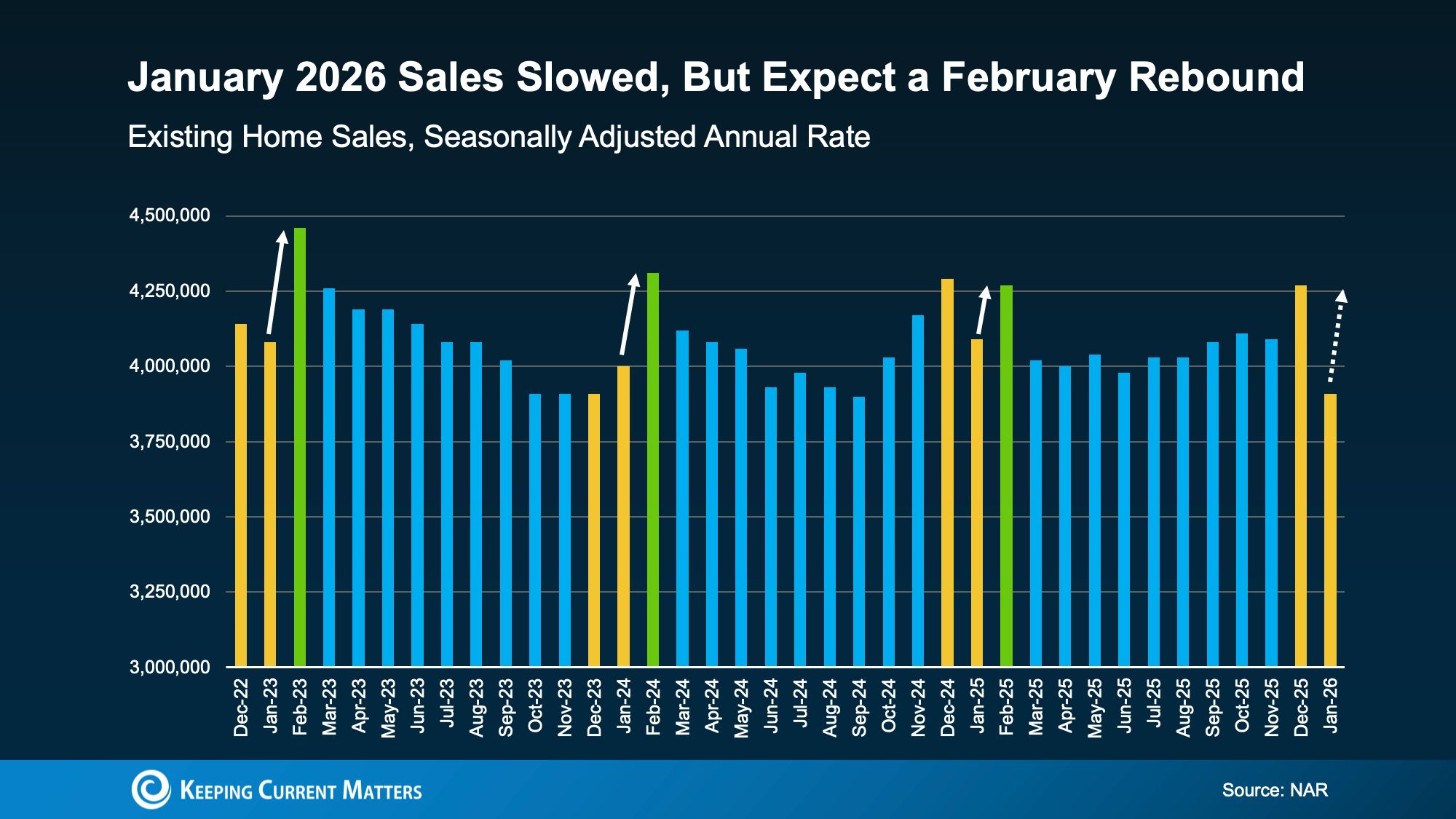
So while the market experienced a brief slowdown, momentum is already positioned to return.
If you’re wondering why the decline was more pronounced this year—especially with mortgage rates lower than they were a year ago—here’s the explanation. As Realtor.com noted:
“Winter Storm Fern, which brought heavy snow and ice to much of the country, likely delayed some closings. That disruption weighed on the data and made it harder to separate true housing market momentum from short-term weather impacts.”
This January, 40 states experienced widespread winter weather, according to the National Weather Service. In real estate, conditions like that naturally slow momentum—and here’s why.
Existing home sales reflect completed closings, not newly signed contracts. So when storms delay inspections, appraisals, or final walk-throughs, many deals simply roll into the following month rather than falling apart—especially when both sides are motivated to move forward.
Are Home Sales About to Rebound?
January’s “missing” sales are far more likely delayed than lost. The demand is still there—it’s simply taking a bit longer to convert into closed transactions.
And the broader data continues to signal solid momentum as the spring market approaches.
Affordability has now improved for seven consecutive months, and buyers are regaining negotiating leverage in many markets nationwide. So this single monthly report doesn’t signal a pullback in demand—it simply reflects seasonal timing. As temperatures rise, activity is expected to follow.
Bottom Line
Don’t mistake a weather-driven slowdown for a weakening market. With affordability continuing to improve, the data points toward increased activity ahead—not less.
If headlines or online chatter leave you uncertain, connect with a local real estate professional. The right context can make all the difference.
{ "@context": "https://schema.org", "@type": "FAQPage", "mainEntity": [ { "@type": "Question", "name": "Why did home sales slow in January?", "acceptedAnswer": { "@type": "Answer", "text": "Home sales slowed in January mainly due to normal seasonal patterns and Winter Storm Fern, which brought heavy snow and ice across 40 states and delayed inspections, appraisals, and final walk-throughs for many transactions." } }, { "@type": "Question", "name": "How much did home sales drop in January?", "acceptedAnswer": { "@type": "Answer", "text": "According to the National Association of Realtors, home sales slowed by about 8.4% month over month in January." } }, { "@type": "Question", "name": "Does the January slowdown signal a weakening housing market?", "acceptedAnswer": { "@type": "Answer", "text": "No. A dip in January is typical in most years. This decline reflects seasonal timing and weather disruptions, not a drop in buyer demand." } }, { "@type": "Question", "name": "Why were the sales numbers more pronounced than usual this year?", "acceptedAnswer": { "@type": "Answer", "text": "Winter Storm Fern was unusually widespread, impacting 40 states with heavy snow and ice. That delayed closings across much of the country and made it harder to separate true market momentum from short-term weather effects." } }, { "@type": "Question", "name": "Are the \"lost\" January sales gone for good?", "acceptedAnswer": { "@type": "Answer", "text": "Most likely not. Existing home sales track completed closings rather than signed contracts, so weather-delayed transactions typically roll into the following month instead of falling apart when both parties remain motivated." } }, { "@type": "Question", "name": "What typically happens to home sales in February?", "acceptedAnswer": { "@type": "Answer", "text": "Home sales historically rebound in February as the spring market begins to build momentum, a pattern that has shown up consistently in past years' data." } }, { "@type": "Question", "name": "What does affordability look like heading into spring?", "acceptedAnswer": { "@type": "Answer", "text": "Affordability has improved for seven consecutive months, and buyers are regaining negotiating leverage in many markets—both signs that activity can increase heading into spring." } }, { "@type": "Question", "name": "What should sellers take away from this report?", "acceptedAnswer": { "@type": "Answer", "text": "A single monthly dip driven by weather and seasonality is not a reason for concern. Underlying demand remains intact, and broader indicators point to a more active spring market." } } ] }
Categories
Recent Posts




GET MORE INFORMATION
